Key Takeaways
- DVC (Data Version Control) versions data and ML experiments like code.
- It brings Git-like workflows to datasets, models, and pipelines.
- It is open-source, free, and works alongside Git.
- Great for data scientists and ML teams making work reproducible.
DVC (Data Version Control) solves a problem every ML team hits: Git is great for code but hopeless for the huge datasets and model files that machine learning depends on. DVC brings Git-like versioning to data, models, and experiments — so you can track, reproduce, and share ML work the way software teams manage code. Open-source and free, it has become a staple for making data science reproducible.
What is DVC?
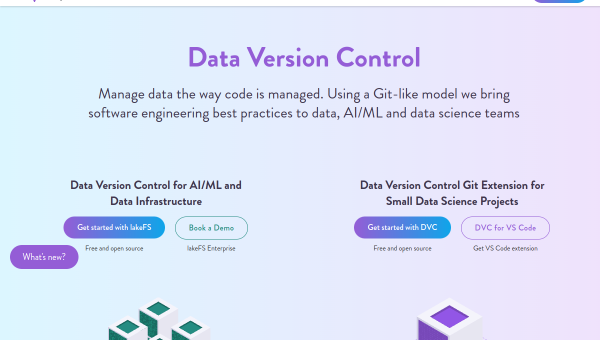
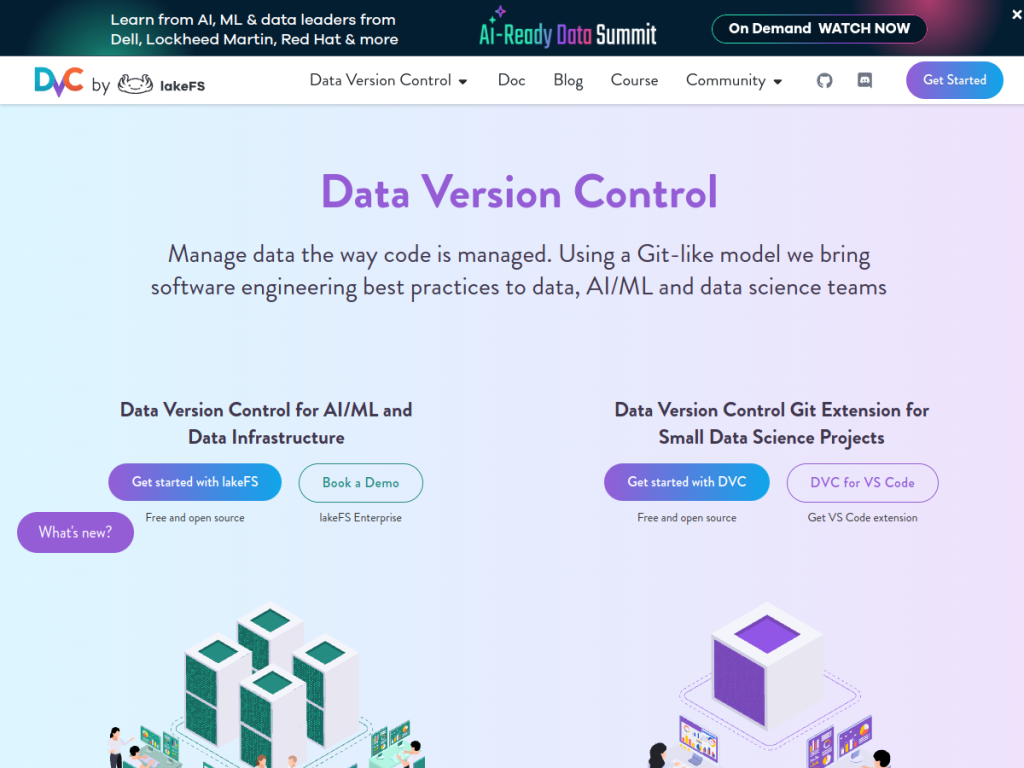
DVC (Data Version Control) is an open-source tool that helps teams manage data the way code is managed, using a Git-like model to bring software engineering best practices to data, AI/ML, and data science teams. It versions large datasets and model files without putting them in Git (storing them in remote storage while tracking lightweight pointers in your repository), defines reproducible ML pipelines, and tracks experiments and metrics so results can be compared and reproduced. It works alongside Git rather than replacing it, and is available as a VS Code extension for local workflows. The broader ecosystem includes enterprise-scale options for large multimodal object stores (with lakeFS having taken on the DVC community), while DVC itself remains a lightweight choice for individual projects and teams. It serves data scientists, ML engineers, and organizations from startups to large enterprises. DVC is open-source and free to use.
What it does well
- Git-like for data: version datasets and models properly.
- Reproducible: define pipelines and track experiments.
- Works with Git: complements your existing workflow.
- Free and open-source: widely adopted, with a VS Code extension.
Who it is for
DVC fits data scientists, ML engineers, and teams who need to version datasets and models, define reproducible pipelines, and track experiments — bringing the discipline of software engineering to machine-learning work that Git alone cannot handle. Its Git-adjacent design suits teams already using version control. Individuals doing one-off analyses may not need it, and adopting it takes some workflow discipline, but for making data science and ML reproducible and collaborative, DVC is an excellent, free choice.
Things to keep in mind
- Adopting it takes some workflow discipline and setup.
- You supply your own remote storage for data.
- Very large-scale needs may point to enterprise options in the ecosystem.
Our verdict
DVC is an excellent, widely adopted open-source tool that fixes a real gap: Git handles code beautifully but cannot manage the large datasets and model files machine learning runs on. DVC brings Git-like versioning to data and models, defines reproducible pipelines, and tracks experiments — working alongside Git rather than replacing it, with a VS Code extension for convenience. For teams that want ML work to be reproducible, comparable, and shareable, that discipline is invaluable. It takes some workflow adoption and your own storage, but as free, open-source data versioning, DVC is a top choice.
Frequently asked questions
What is DVC?
DVC (Data Version Control) is an open-source tool that versions datasets, models, and ML experiments using a Git-like model, bringing software engineering practices to data science.
How does DVC work with Git?
It works alongside Git: large data and model files live in remote storage while DVC tracks lightweight pointers in your Git repository, keeping versioning practical.
Is DVC free?
Yes, DVC is open-source and free to use; you supply your own remote storage, and enterprise-scale options exist in the broader ecosystem.
Who is DVC for?
It is for data scientists, ML engineers, and teams who need reproducible, versioned data, models, pipelines, and experiments.