Key Takeaways
- Connected Papers builds visual graphs of related academic papers.
- Enter one paper and see its research neighbourhood as a map.
- It surfaces prior and derivative works you would otherwise miss.
- Great for researchers exploring an unfamiliar field fast.
Connected Papers does one thing and does it beautifully: give it a single academic paper, and it draws a visual graph of the papers most similar to it — the research neighbourhood around your starting point. Rather than trudging through citation lists, you see the field laid out, with related work clustered and the influential nodes obvious at a glance. For anyone entering an unfamiliar research area, it is a genuinely excellent way to get oriented.
What is Connected Papers?
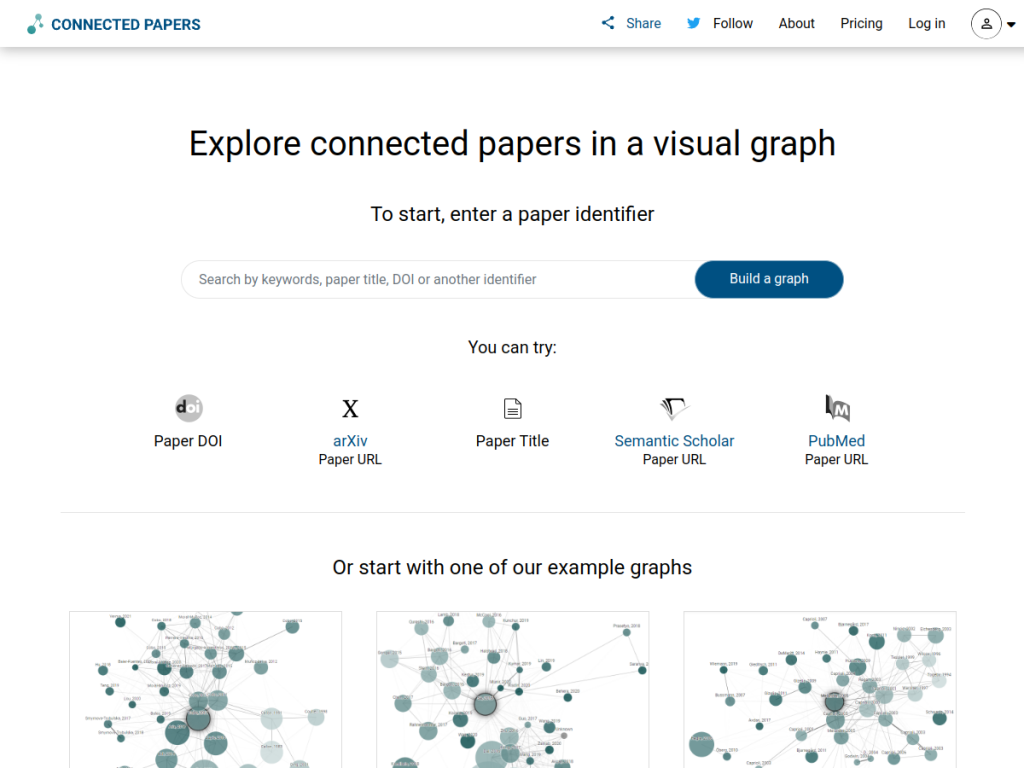
Connected Papers is a visual research tool that helps academics and students explore academic literature through graph visualization. You enter a paper (by title, DOI, or link) and it generates a graph of the most related papers, positioning them by similarity rather than by direct citation — papers that are strongly connected in the field cluster together, with node size typically reflecting citation count and colour reflecting publication year. Its similarity measure is based on co-citation and bibliographic coupling, meaning it surfaces papers that share a research context even when they do not cite each other directly, which is precisely what makes it useful for discovery. Beyond the main graph it offers Prior Works (the foundational papers a field builds on) and Derivative Works (surveys and later work building on it), so you can look both backwards and forwards from a starting point. It draws on large academic databases and covers many fields. It offers a limited number of free graphs per month with paid plans for unlimited use.
What it does well
- Visual discovery: see a field as a map, not a list.
- Smart similarity: finds related work beyond direct citations.
- Prior and Derivative Works: look backwards and forwards.
- Free to start: a few graphs per month at no cost.
Who it is for
Connected Papers fits researchers, PhD students, and academics who need to get oriented in an unfamiliar field quickly, run a literature review, or make sure they have not missed important related work. Its co-citation-based similarity is genuinely good at surfacing relevant papers that a plain citation chase would never reach. It is a discovery and exploration tool rather than a full reference manager or a replacement for reading, and heavy use needs a paid plan, but for mapping a research area, Connected Papers is an excellent, free-to-start choice.
Things to keep in mind
- It is for discovery — not a reference manager or a substitute for reading.
- Free use is limited to a few graphs per month.
- Coverage depends on the underlying academic databases.
Our verdict
Connected Papers is an excellent research tool that does one thing beautifully: enter a single paper and it maps the research neighbourhood around it as a visual graph, clustering related work by genuine similarity rather than direct citation — so it surfaces papers a citation chase would miss entirely. Prior Works and Derivative Works let you trace a field backwards to its foundations and forwards to what it became. For getting oriented in an unfamiliar area or running a literature review, that is genuinely valuable. Free use is limited and it is a discovery tool rather than a reference manager, but it is an excellent choice.
Frequently asked questions
What is Connected Papers?
Connected Papers is a visual research tool that takes one academic paper and generates a graph of the most related papers, mapping the research neighbourhood around it.
How does Connected Papers find related work?
It uses similarity based on co-citation and bibliographic coupling, so it surfaces papers sharing a research context even when they do not cite each other directly.
What are Prior and Derivative Works?
Prior Works shows the foundational papers a field builds on; Derivative Works shows surveys and later research building on your starting paper.
Is Connected Papers free?
It offers a limited number of free graphs per month, with paid plans for unlimited use.
Top Connected Papers alternatives
Other hand-reviewed Education tools worth comparing against Connected Papers.
Ada HealthFree
Ada Health is a free AI education and healthcare tool for healthcare providers. Our review covers what it…
Buoy HealthFree
Buoy Health is a free AI education and healthcare tool for healthcare providers. Our review covers what it…
ChatPDFFreemium
ChatPDF is a freemium AI education and pdf-tool tool for document-heavy teams. Our review covers what it does,…
Coursera AIFreemium
Coursera AI is a freemium AI business and education tool for students and educators. Our review covers what…
Duolingo MaxFreemium
Duolingo Max is a freemium AI education and translation tool for students and educators. Our review covers what…
Google Translate AIFree
Google Translate AI is a free AI business and education tool for students and educators. Our review covers…
Are you the maker of Connected Papers?
Show visitors this review with the badge below. Copy the code into your site or press kit; it links straight back to this page.