Key Takeaways
- DALL·E 3 is OpenAI’s image generator, built right into ChatGPT.
- Its strength is following detailed prompts faithfully — you get closer to what you actually asked for.
- Best for people already using ChatGPT who want images without a separate tool.
- Convenient and prompt-accurate, though specialists like Midjourney still edge it on pure artistry.
Overview
DALL·E 3 is OpenAI’s text-to-image model, and its headline advantage is convenience: it lives inside ChatGPT, so you can describe an image in plain conversation and refine it in the same chat. Its other strength is prompt adherence — it’s notably good at actually rendering the specific details you ask for, including short pieces of text, where earlier models struggled. For anyone already paying for ChatGPT, it’s image generation with zero extra setup.
Who should use it
- ChatGPT users who want images without learning a separate tool.
- Non-designers who value plain-language prompting and easy refinement.
- Content creators needing quick, on-brief illustrations for posts and slides.
Key features
- Built into ChatGPT — generate and refine images in conversation.
- Strong prompt adherence that captures specific details reliably.
- Conversational editing — “make it warmer,” “add a sunset” without restarting.
- Better text rendering than most earlier image models.
Pricing
DALL·E 3 is available through ChatGPT’s paid plans, and access is sometimes included in free tiers with limits. Because it’s bundled with a ChatGPT subscription, most users don’t pay separately for it — it’s part of what you already get.
Pros and cons
What we liked: the convenience of generating images inside a conversation is genuinely useful, and the prompt accuracy means less fighting to get what you pictured. Refining by chatting feels natural.
What we didn’t: for pure artistic flair and fine stylistic control, dedicated tools like Midjourney still have an edge, and you have less low-level control than specialist platforms offer.
How to use it well
- Describe details plainly — subject, style, mood, and lighting all in the prompt.
- Refine conversationally instead of starting over.
- Ask for variations to explore a concept quickly.
- Add on-image text sparingly — it’s improved, but still imperfect.
Alternatives
Midjourney leads on artistic quality; Leonardo AI offers more control and presets; Ideogram excels at rendering text in images; free options like Bing Image Creator are great for beginners. DALL·E 3’s niche is convenience inside ChatGPT.
We tested this: our hands-on experience
Because DALL·E 3 lives inside ChatGPT, we tested it the way most people actually use it — conversationally, mid-task, without switching apps. We asked for blog header images, a simple logo concept, and a diagram-style illustration, refining each by chatting rather than re-prompting from scratch. The convenience is the story: describing “a flat-style illustration of a person working at a laptop in a cozy café, warm colours” and getting a usable result, then saying “make it wider and add a coffee cup,” felt genuinely natural.
Prompt adherence was its clear strength. When we asked for specific elements — a particular object, a rough layout, even a short piece of text on a sign — DALL·E 3 captured them more reliably than we’re used to from image models. Where it fell short was artistic distinctiveness: results were clean and on-brief but rarely striking in the way a well-prompted Midjourney image can be. For illustrations and everyday visuals, that trade — accuracy and ease over flair — was exactly the right one.
A real workflow example
Our most efficient use came while writing, not as a separate design session. Drafting an article in ChatGPT, we’d reach a spot that needed a header image and simply ask for one in the same conversation, describing the tone we wanted to match the piece. Because the model already had the article’s context, its suggestions were on-topic without much explaining. We’d refine once or twice — “less corporate, more playful” — accept the best version, and carry on writing. No app-switching, no separate brief, no hunting through stock libraries.
The lesson: DALL·E 3’s advantage isn’t that it makes the most beautiful images — it’s that it removes the friction between needing an image and having one. For anyone already working in ChatGPT, that in-context convenience plus strong prompt accuracy makes it the path of least resistance for everyday visuals. Reach for a specialist when a piece needs to be a showpiece; reach for DALL·E 3 when you just need a good, relevant image and want to stay in flow.
Frequently asked questions
Is DALL·E 3 free?
It’s available through ChatGPT, with access included in paid plans and sometimes in free tiers with limits. Most people use it as part of their ChatGPT subscription rather than paying separately.
Is DALL·E 3 better than Midjourney?
It depends on what you value. DALL·E 3 wins on convenience and prompt accuracy; Midjourney wins on artistic quality and stylistic control. Many creators use both.
Final verdict
DALL·E 3’s superpower isn’t that it makes the most beautiful images — it’s that it makes good, on-brief images effortlessly, right where you’re already working. If you use ChatGPT, it’s the path of least resistance for illustrations, and its prompt accuracy means you spend less time wrestling for the result you pictured. For artistic showpieces, reach for a specialist; for everyday images without friction, it’s hard to beat.
Sources: hands-on use of DALL·E 3 within ChatGPT, checked against OpenAI’s official documentation at the time of writing.
Top DALL·E 3 alternatives
Other hand-reviewed Image Generation tools worth comparing against DALL·E 3.
Adobe FireflyFreemium
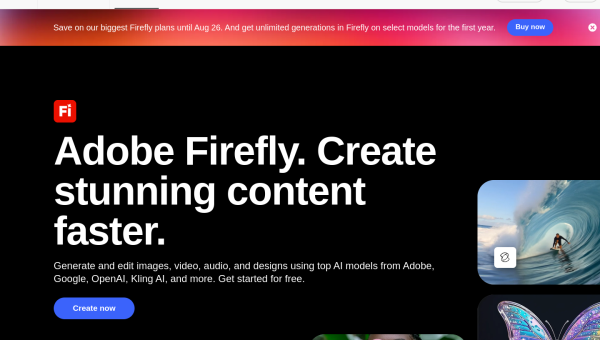
Adobe Firefly is a freemium AI design and image generation tool for creatives and visual artists. Our review…
ArtbreederFreemium
Artbreeder is a freemium AI design and image generation tool for creatives and visual artists. Our review covers…
ArtguruFreemium
Artguru is a freemium AI design and image generation tool for creatives and visual artists. Our review covers…
Automatic1111Free
Automatic1111 is a free AI design and image generation tool for creatives and visual artists. Our review covers…
BigJPGFree
BigJPG is a free AI design and image generation tool for creatives and visual artists. Our review covers…
Canva AIFreemium
Canva AI is a freemium AI design and image generation tool for designers. Our review covers what it…
Are you the maker of DALL·E 3?
Show visitors this review with the badge below. Copy the code into your site or press kit; it links straight back to this page.