Key Takeaways
- DoNotPay is an AI-powered consumer-rights assistant, billed as a “robot lawyer.”
- It automates tasks like canceling subscriptions, disputing fees, and refunds.
- It is a self-help tool — not a law firm and not legal advice.
- Handy for everyday consumer tasks; verify important or high-stakes matters yourself.
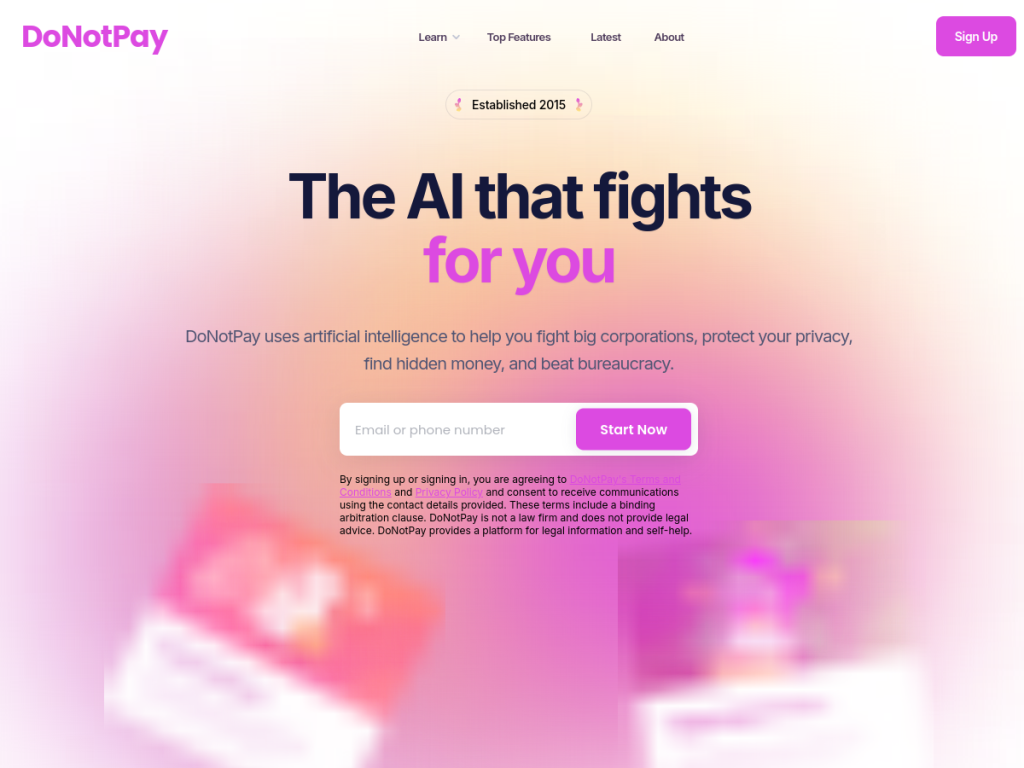
DoNotPay is an AI-powered consumer assistant that aims to help people push back against corporations and handle tedious consumer tasks — canceling unwanted subscriptions, disputing fees, requesting refunds, and more. Founded in 2015 and often called a “robot lawyer,” it offers a large set of automated tools. Importantly, DoNotPay states it is not a law firm and does not provide legal advice; it is a self-help platform, and it is best approached with that in mind.
What is DoNotPay?
DoNotPay describes itself as an AI consumer champion, a platform founded in 2015 that uses AI to automate consumer-advocacy tasks and help users navigate disputes with companies, manage subscriptions, and access consumer protections. It advertises a large set of tools (100-plus) across categories such as free-trial protection with virtual cards to prevent surprise charges, automated subscription cancellation, bill negotiation for utilities and internet, refund and chargeback assistance, locating unclaimed money, robocall defense, and various government-service tasks like DMV scheduling and FOIA requests. The service has been featured in major outlets and received recognition for access-to-justice efforts. Crucially, DoNotPay explicitly states it is not a law firm and does not provide legal advice, positioning itself as a self-help platform for consumer information and automation. It operates as a subscription service. (Note: the company has faced regulatory scrutiny over some marketing claims, so treat higher-stakes matters carefully.)
What it does well
- Broad toolkit: many consumer tasks automated in one place.
- Convenience: cancel subscriptions and dispute fees without the hassle.
- Free-trial protection: virtual cards to avoid surprise charges.
- Everyday tasks: refunds, robocall defense, and admin chores.
Who it is for
DoNotPay is aimed at everyday consumers who want help automating routine tasks — canceling subscriptions, disputing charges, requesting refunds, fighting robocalls, and similar chores — without doing all the legwork themselves. It can be a convenient time-saver for low-stakes consumer issues. However, because it is explicitly not a law firm and not legal advice — and given past regulatory scrutiny of some claims — it should not be relied on for serious legal matters, where consulting a qualified professional is wise. Used with realistic expectations for everyday tasks, DoNotPay can be a handy assistant.
Things to keep in mind
- DoNotPay is not a law firm and does not provide legal advice.
- The company has faced regulatory scrutiny over some marketing claims.
- For serious or high-stakes legal matters, consult a qualified professional.
Our verdict
DoNotPay is an ambitious AI consumer assistant, and its broad toolkit — canceling subscriptions, disputing fees, chasing refunds, fighting robocalls, and handling everyday admin — can be a genuine convenience for low-stakes consumer tasks. Free-trial protection and subscription cancellation are especially handy. The important caveats are clear: it is explicitly not a law firm and not legal advice, and it has faced regulatory scrutiny over some claims, so higher-stakes matters warrant a qualified professional. Approached realistically for everyday tasks, DoNotPay is a useful, if imperfect, helper.
Frequently asked questions
What is DoNotPay?
DoNotPay is an AI-powered consumer-rights assistant that automates tasks like canceling subscriptions, disputing fees, and requesting refunds. It describes itself as a self-help platform, not a law firm.
Is DoNotPay a real lawyer?
No. DoNotPay explicitly states it is not a law firm and does not provide legal advice; it is a self-help tool for consumer information and automation.
What can DoNotPay help with?
It offers many tools, including free-trial protection with virtual cards, subscription cancellation, bill negotiation, refunds, robocall defense, and some government-service tasks.
Should I use DoNotPay for serious legal issues?
For serious or high-stakes legal matters, it is best to consult a qualified professional, since DoNotPay is a self-help tool and not legal advice.
Top DoNotPay alternatives
Other hand-reviewed Legal tools worth comparing against DoNotPay.
CoCounselPaid
CoCounsel by Thomson Reuters is a paid AI business and legal tool for legal professionals. Our review covers…
ContractPodAiPaid
ContractPodAi is a paid AI business and legal tool for legal professionals. Our review covers what it does,…
IcertisPaid
Icertis is a paid AI business and legal tool for legal professionals. Our review covers what it does,…
IroncladPaid
Ironclad is a paid AI business and legal tool for legal professionals. Our review covers what it does,…
LexisNexis+Enterprise
LexisNexis+ is an enterprise AI business and legal tool for legal professionals. Our review covers what it does,…
LinkSquaresPaid
LinkSquares is a paid AI business and legal tool for legal professionals. Our review covers what it does,…
Are you the maker of DoNotPay?
Show visitors this review with the badge below. Copy the code into your site or press kit; it links straight back to this page.