Key Takeaways
- Elicit is an AI research assistant for searching and analysing academic papers.
- It automates literature reviews, summarises papers, and extracts data with citations.
- Aimed at researchers in academia and industry doing evidence-based work.
- A powerful accelerator; you must still verify findings against the source papers.
Elicit is built to speed up serious research. Instead of manually trawling through hundreds of papers, you can ask a research question and have Elicit search a huge database of academic literature, summarise findings, and extract data into a structured table — with citations back to the source. For literature reviews, it can save an enormous amount of time.
What is Elicit?
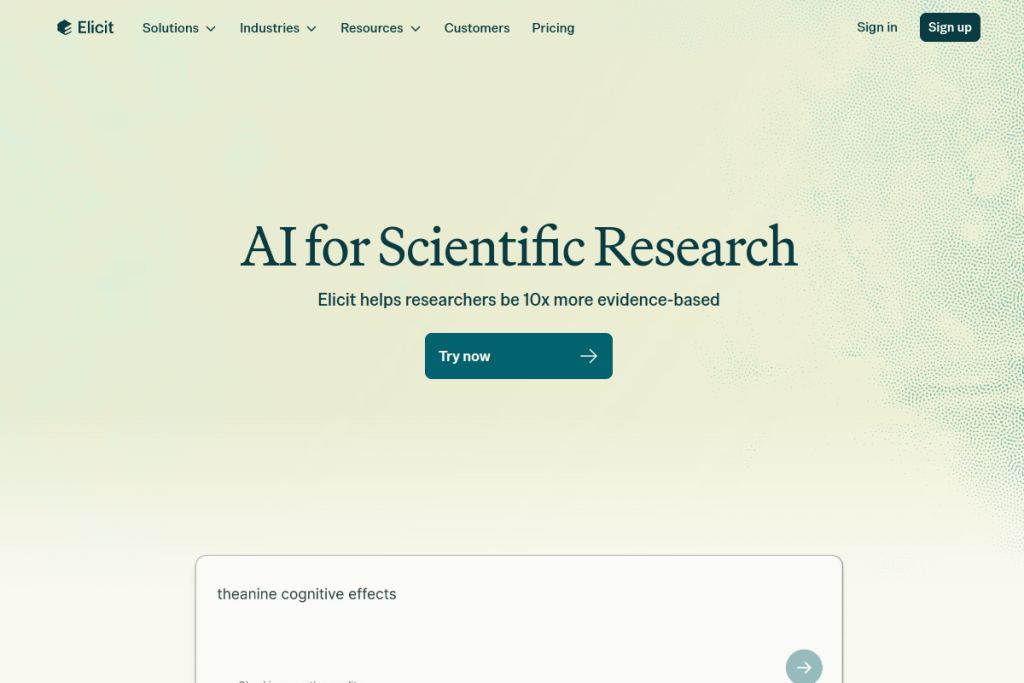
Elicit is an AI platform for scientific research that helps you search, summarise, and extract data from over a hundred million academic papers. It can generate research reports with automatic citations, automate systematic literature reviews, organise sources in a library, and send alerts on new publications. Its emphasis is on transparency — sentence-level citations and verifiable sources rather than opaque chatbot answers.
What it does well
- Literature search — find relevant papers across a huge academic database.
- Data extraction — pull findings into structured tables at scale.
- Citations — sentence-level, verifiable source attribution.
- Review automation — speed up systematic literature reviews.
- Organisation — a library and alerts to stay current.
Who it is for
Elicit suits researchers in academia and industry — across fields like pharmaceuticals, medical devices, policy, and more — who need to review large bodies of literature efficiently. It is especially valuable for anyone doing systematic reviews or evidence synthesis, where the manual workload is enormous.
Things to keep in mind
AI can misread nuance or miss context in complex papers, so Elicit is an accelerator, not a replacement for expert judgement — you must verify its summaries and extractions against the source papers, especially for anything you will rely on or publish. Its transparency features help, but the responsibility for accuracy stays with the researcher.
Our verdict
Elicit is a genuinely powerful tool for evidence-based research, and its focus on citations and transparency sets it apart from generic chatbots. For literature reviews and data extraction at scale, it can save researchers substantial time. Treat its output as a rigorously-checked starting point — verify against sources — and it becomes a serious accelerator for research work.
Frequently asked questions
Does Elicit provide citations?
Yes — it emphasises transparency with sentence-level, verifiable citations back to the source papers, rather than giving opaque chatbot-style answers.
Can I trust Elicit’s summaries completely?
Treat them as a fast, well-cited starting point. AI can miss nuance in complex papers, so verify summaries and extractions against the source material before relying on them.
Reviewed by the World of AI Hub editorial team based on the tool website and documentation.
Top Elicit alternatives
Other hand-reviewed Research tools worth comparing against Elicit.
Ada HealthFree
Ada Health is a free AI education and healthcare tool for healthcare providers. Our review covers what it…
AidocPaid
Aidoc is a paid AI healthcare and research tool for healthcare providers. Our review covers what it does,…
Andi SearchFree
Andi Search by Andi (LazyWeb) is a free AI chatbot and research tool for researchers. Our review covers…
Brave Search AIFreemium
Brave Search AI by Brave Software is a freemium AI research and search engine tool for researchers. Our…
ChatPDFFreemium
ChatPDF is a freemium AI education and pdf-tool tool for document-heavy teams. Our review covers what it does,…
ClaudeFreemium
Claude by Anthropic is a freemium AI assistant and chatbot tool for writers and marketers. Our review covers…
Are you the maker of Elicit?
Show visitors this review with the badge below. Copy the code into your site or press kit; it links straight back to this page.