Key takeaways
- Figma is the industry-standard collaborative design platform, used by a huge share of design teams and the Fortune 500.
- It is now AI-native: Figma Make turns prompts into code, Figma Weave handles AI imagery/video, and AI works in the canvas.
- Its core strengths remain real-time collaboration, prototyping and a bridge between design and development (Dev Mode).
- AI features accelerate work, but generated design and code still need designer and developer review.
What Figma is
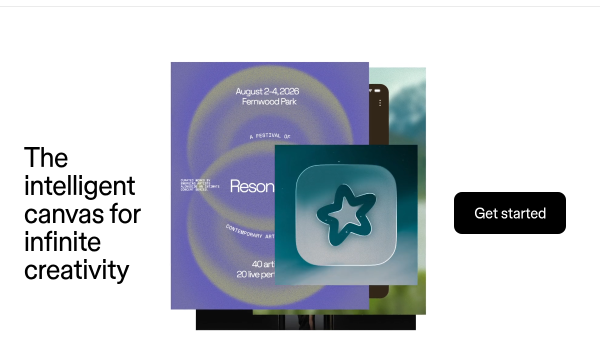
Figma is the leading collaborative interface-design platform — the tool most product design teams use to design apps and websites, prototype interactions and hand off to developers, all in the browser with real-time multiplayer collaboration. Its dominance is striking: it is used across the vast majority of design teams and a large share of the Fortune 500. Over the past couple of years Figma has been rapidly integrating AI throughout the product, repositioning itself as an “AI-native” design platform where designers and AI work in the same shared canvas.
Its foundation is collaboration and being the connective tissue between design and engineering. Figma made design a real-time team sport and, through Dev Mode and code features, narrowed the gap between a design and the code that implements it. The AI additions build on that foundation rather than replacing it — the collaboration and design tooling remain the core reason it is an industry standard.
The AI features
Figma’s AI spans several tools. Figma Make converts prompts into working code, letting designers generate and refine design directions with AI while keeping shared team context. Figma Weave is a node-based AI workflow for imagery, video, audio and more. Across the canvas, AI agents work alongside teammates with shared context, and additional tools (like Figma Motion) extend the platform. The direction is clear: bringing generative and agentic AI into a design workflow that already connects designers and developers.
These AI features can genuinely accelerate work — generating starting points, producing code, creating assets — but they do not remove the need for craft. AI-generated designs still require a designer’s judgement to be good and on-brand, and AI-generated code needs developer review and testing before it ships, since it can be flawed or insecure. Figma’s AI is most powerful as an accelerant within a skilled team’s workflow, not as a replacement for design and engineering expertise.
Strengths and limits
The strengths are collaboration, industry-standard status and now AI. Real-time multiplayer design, strong prototyping, the design-to-dev bridge and a deep ecosystem make Figma the default choice for product design, and its AI features add generation and code capabilities without abandoning that foundation. Being the standard also means abundant plugins, resources and talent.
The limits: it is a professional design tool with a learning curve, priced accordingly for teams, and its AI — like all generative AI — produces drafts that need designer and developer review. For simple graphics, a lighter tool may suffice. But for serious interface design, Figma’s combination of collaboration and AI is hard to beat.
Who it suits
- Product design teams building apps and websites collaboratively.
- Designers and developers who want a shared design-to-code workflow.
- Teams that want generative and agentic AI inside an industry-standard design tool.
Verdict
Figma is the industry-standard collaborative design platform, and its move to AI-native — Figma Make turning prompts into code, Figma Weave for AI media, and AI agents in the shared canvas — extends its strengths without abandoning the real-time collaboration and design-to-development bridge that made it dominant. Its AI accelerates work, but generated designs and code still need designer and developer review to be good and safe. For serious interface design, Figma remains the leading choice, now with genuinely useful AI woven throughout.
Top Figma alternatives
Other hand-reviewed Design tools worth comparing against Figma.
AdCreative.aiPaid
AdCreative.ai is a paid AI design and marketing tool for marketers. Our review covers what it does, pricing,…
Adobe ExpressFreemium
Adobe Express is a freemium AI design and marketing tool for designers. Our review covers what it does,…
Adobe FireflyFreemium
Adobe Firefly is a freemium AI design and image generation tool for creatives and visual artists. Our review…
ArtbreederFreemium
Artbreeder is a freemium AI design and image generation tool for creatives and visual artists. Our review covers…
ArtguruFreemium
Artguru is a freemium AI design and image generation tool for creatives and visual artists. Our review covers…
Automatic1111Free
Automatic1111 is a free AI design and image generation tool for creatives and visual artists. Our review covers…
Are you the maker of Figma?
Show visitors this review with the badge below. Copy the code into your site or press kit; it links straight back to this page.