Key Takeaways
- Google Scholar is a free search engine for academic literature.
- It indexes papers, theses, books, and court opinions broadly.
- It tracks citations and offers author profiles and alerts.
- An essential, free starting point for any literature search.
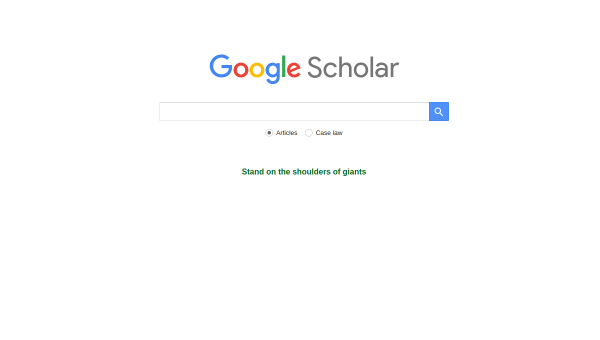
Google Scholar is the free front door to academic literature, and after two decades it remains the first place most researchers look. It indexes papers, theses, books, abstracts, and court opinions across essentially every discipline and publisher, tracks who cited what, and finds free versions of paywalled papers when they exist. It is not flashy and it is not perfect, but its breadth and price — free — make it genuinely indispensable.
What is Google Scholar?
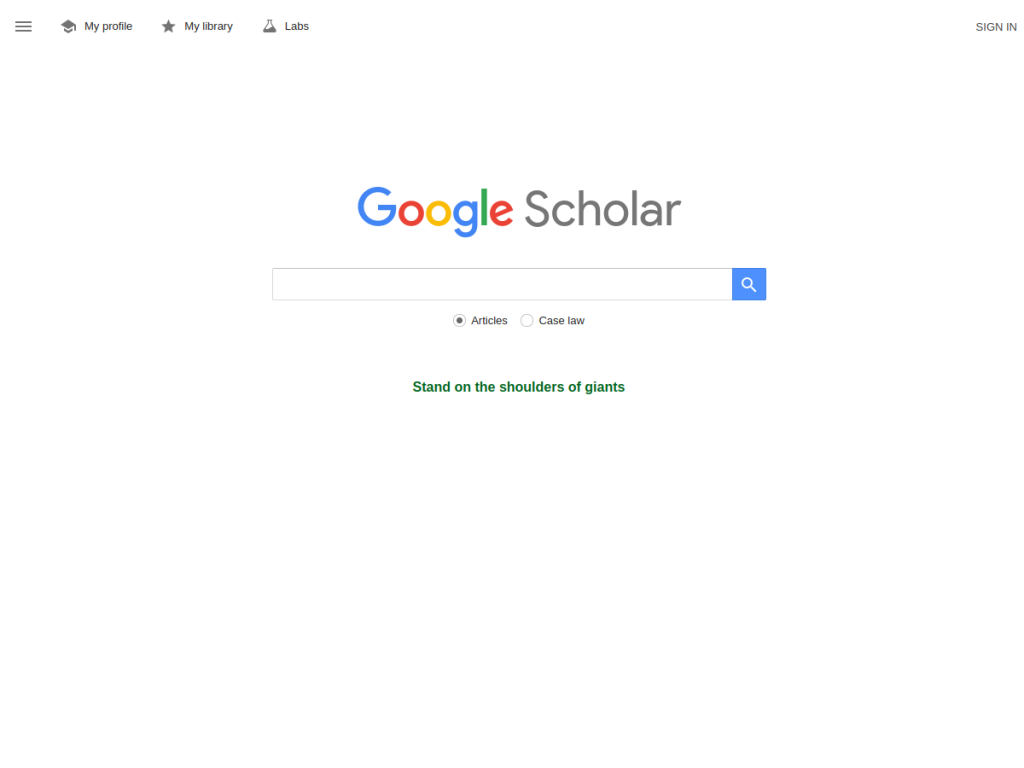
Google Scholar is Google’s free search engine for scholarly literature, launched in 2004. It indexes a very broad range of academic material across disciplines and sources — peer-reviewed papers, theses and dissertations, books, abstracts, preprints, technical reports, and court opinions — drawn from academic publishers, professional societies, online repositories, universities, and other websites. Its key features include citation tracking (“Cited by” links showing which later works cite a paper, a powerful way to trace a field forwards), related articles, author profiles with citation metrics (including the h-index), the “My Library” feature for saving papers, alerts for new work matching a query or citing a paper, citation export in common formats (BibTeX, EndNote, RefMan), and links to free full-text versions when they exist alongside publisher links. Its breadth is both its strength and its noted weakness: because it indexes widely and automatically, coverage is exceptional but quality control is looser than curated databases like Scopus or Web of Science, and predatory-journal content can appear. It is free to use.
What it does well
- Free and vast: broad coverage across every discipline.
- Citation tracking: trace a field forwards via “Cited by”.
- Finds free copies: surfaces open versions of paywalled work.
- Useful extras: alerts, author profiles, and citation export.
Who it is for
Google Scholar fits essentially every researcher, student, and academic as a first stop for finding literature, tracing citations forward through a field, setting alerts on a topic, and locating free versions of papers behind paywalls — all at no cost. Its breadth is unmatched. The honest caveat is that breadth comes at the price of curation: unlike Scopus or Web of Science it indexes automatically and widely, so quality control is looser and predatory-journal content can surface — evaluate sources yourself, and use curated databases for systematic reviews. As a free starting point, though, it is indispensable.
Things to keep in mind
- Looser quality control than curated databases; predatory journals can appear.
- Systematic reviews should also use curated databases like Scopus.
- Full-text access still depends on publisher paywalls or your institution.
Our verdict
Google Scholar is indispensable, and two decades on it is still the first place most researchers look — for good reason. It indexes an extraordinary breadth of scholarly material across every discipline, tracks citations so you can trace a field forwards through “Cited by,” surfaces free versions of paywalled papers, and adds alerts, author profiles, and citation export, all free. The honest caveat is that its automatic, wide indexing means looser quality control than curated databases like Scopus, so evaluate sources yourself and use curated databases for systematic reviews. As a free starting point, nothing beats it.
Frequently asked questions
What is Google Scholar?
Google Scholar is Google’s free search engine for scholarly literature, indexing papers, theses, books, abstracts, preprints, and court opinions across all disciplines.
Is Google Scholar free?
Yes, Google Scholar is free to use. Access to full-text papers may still depend on publisher paywalls or your institution’s subscriptions.
What is the “Cited by” feature?
“Cited by” shows which later works cite a paper, letting you trace a field forwards in time from a foundational work — one of Scholar’s most useful features.
What are Google Scholar’s limitations?
Because it indexes automatically and very broadly, quality control is looser than curated databases like Scopus or Web of Science, and predatory-journal content can appear.
Top Google Scholar alternatives
Other hand-reviewed SEO tools worth comparing against Google Scholar.
Ahrefs AIPaid
Ahrefs AI is a paid AI marketing and seo tool for SEO specialists. Our review covers what it…
BrightEdgePaid
BrightEdge is a paid AI marketing and seo tool for SEO specialists. Our review covers what it does,…
ClearscopePaid
Clearscope is a paid AI marketing and seo tool for SEO specialists. Our review covers what it does,…
ConductorPaid
Conductor is a paid AI marketing and seo tool for SEO specialists. Our review covers what it does,…
ContentHarmonyPaid
ContentHarmony by Content Harmony is a paid AI marketing and seo tool for SEO specialists. Our review covers…
CopymaticPaid
Copymatic is a paid AI marketing and seo tool for writers and marketers. Our review covers what it…
Are you the maker of Google Scholar?
Show visitors this review with the badge below. Copy the code into your site or press kit; it links straight back to this page.