Key Takeaways
- Hume AI is an emotional-intelligence lab building expressive voice AI.
- Its models include EVI (speech-to-speech), Octave (expressive TTS), and open-source TADA.
- It offers a Human Feedback API and rich emotion and voice datasets.
- Strong for developers building empathetic voice interfaces; it is a technical API platform.
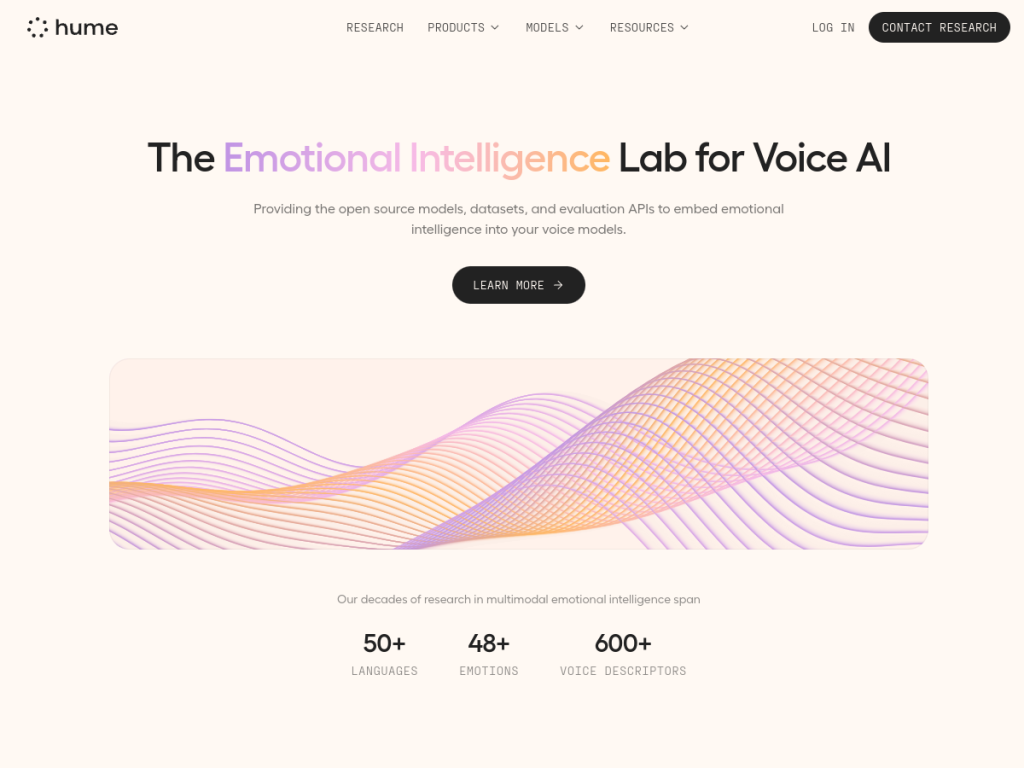
Hume AI is a research lab focused on giving voice AI emotional intelligence — the ability to understand and respond to how people actually sound and feel. Rather than a consumer app, it provides models and tools that developers use to build voice interfaces that are expressive, empathetic, and natural, from customer support to companions and beyond.
What is Hume AI?
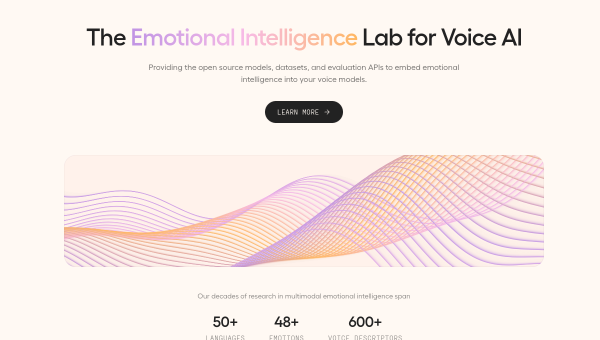
Hume AI describes itself as the emotional-intelligence lab for voice AI, and it offers models, data, and tools for building expressive voice systems. Its models include EVI, a speech-to-speech system with natural conversational features like interruptibility; Octave, a closed-source large-language-model text-to-speech engine with voice design and cloning; and TADA, an open-source LLM TTS that streams text and audio together. Beyond models, it provides a Human Feedback API — a study-runner platform for gathering human preference data on voice models using science-backed survey templates — and curated datasets spanning many languages, dozens of emotions, and hundreds of voice descriptors across domains like healthcare and finance. Hume is developer-focused, accessed via API with usage-based pricing, and grounded in genuine research on emotion and expression.
What it does well
- Emotional intelligence: voice models tuned to understand and express emotion.
- Range of models: EVI speech-to-speech, Octave TTS, and open-source TADA.
- Human feedback tooling: gather preference data to improve voice models.
- Rich datasets: many languages, emotions, and voice descriptors.
Who it is for
Hume AI is for developers and teams building voice-based products that benefit from emotional nuance — conversational assistants, customer support, companions, healthcare and wellness apps, and research. It suits those who want expressive, empathetic speech rather than flat text-to-speech. Non-technical users will find it an API platform, not a ready-made app, but for developers building the next generation of voice interfaces, Hume offers uniquely emotion-aware tools.
Things to keep in mind
- It is a developer, API-first platform, not a consumer application.
- Building great voice experiences still requires engineering and design.
- Usage-based pricing means costs scale with how much you generate.
Our verdict
Hume AI occupies a distinctive niche: voice AI with genuine emotional intelligence, backed by real research. Its range of models — expressive TTS, speech-to-speech, and an open-source option — plus human-feedback tooling and rich datasets make it a compelling foundation for developers building empathetic voice interfaces. It is a technical, API-first platform rather than a consumer app, and costs scale with usage, but for teams that want voice AI which understands and expresses emotion, Hume is a leading and thoughtful choice.
Frequently asked questions
What is Hume AI?
Hume AI is an emotional-intelligence lab for voice AI, offering expressive voice models like EVI, Octave, and the open-source TADA, plus human-feedback tools and emotion datasets.
What is EVI?
EVI is Hume’s speech-to-speech voice AI system with natural conversational features such as interruptibility, designed for empathetic voice interactions.
Is Hume AI open source?
Some of it is. TADA is an open-source LLM text-to-speech model, while others like Octave and EVI are closed-source and accessed via API.
Who is Hume AI for?
It is for developers and teams building voice products that benefit from emotional nuance, such as assistants, support, companions, and healthcare apps.
Top Hume AI alternatives
Other hand-reviewed AI Assistants tools worth comparing against Hume AI.
AiseraPaid
Aisera is a paid AI assistant and chatbot tool for professionals. Our review covers what it does, pricing,…
Amazon LexPaid
Amazon Lex by Amazon Web Services is a paid AI assistant and chatbot tool for professionals. Our review…
Anakin AIFreemium
Anakin AI is a freemium AI assistant and chatbot tool for professionals. Our review covers what it does,…
AvaamoPaid
Avaamo is a paid AI assistant and chatbot tool for professionals. Our review covers what it does, pricing,…
Boost.aiPaid
Boost.ai is a paid AI assistant and chatbot tool for professionals. Our review covers what it does, pricing,…
BotpressFreemium
Botpress is a freemium AI assistant and chatbot tool for professionals. Our review covers what it does, pricing,…
Are you the maker of Hume AI?
Show visitors this review with the badge below. Copy the code into your site or press kit; it links straight back to this page.