Key Takeaways
- LangGraph is an open-source framework for building stateful AI agents.
- It gives developers low-level control over agent workflows.
- It supports single-agent, multi-agent, and hierarchical systems.
- Great for developers building reliable, production-grade AI agents.
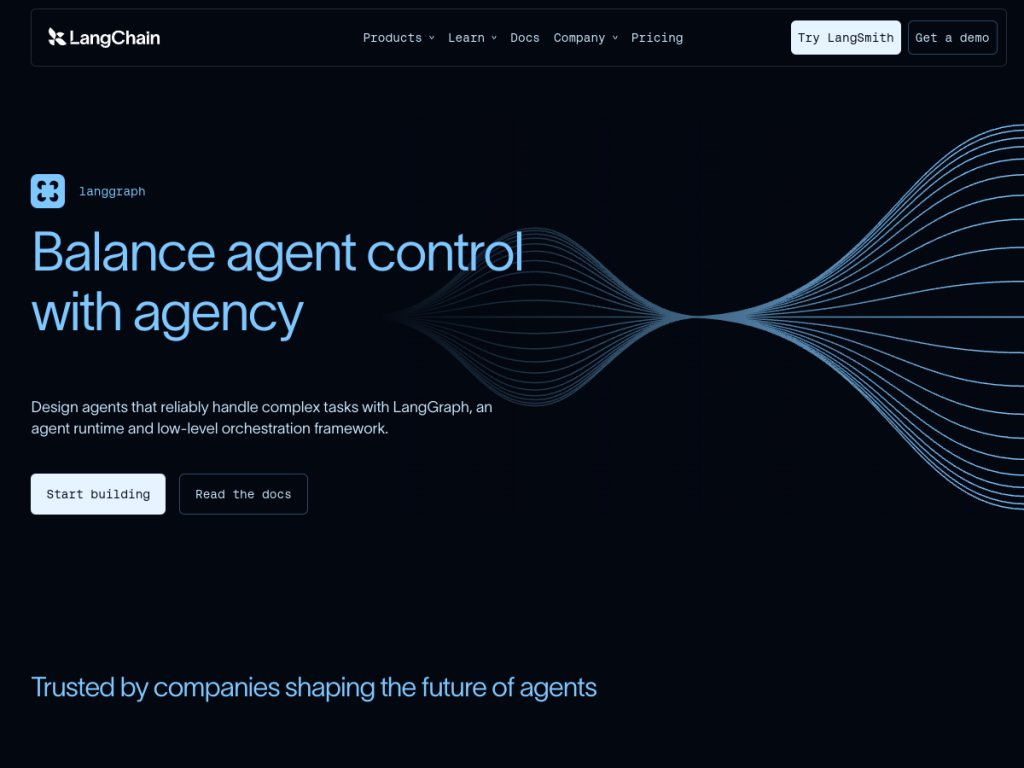
LangGraph is an open-source framework from LangChain for building reliable, stateful AI agents. Instead of a generic, one-size-fits-all agent, it gives developers low-level control to design exactly how an agent reasons, remembers, and acts — including human-in-the-loop checkpoints. Used by major companies for production AI, LangGraph is a go-to choice for teams that need agents they can trust and control.
What is LangGraph?
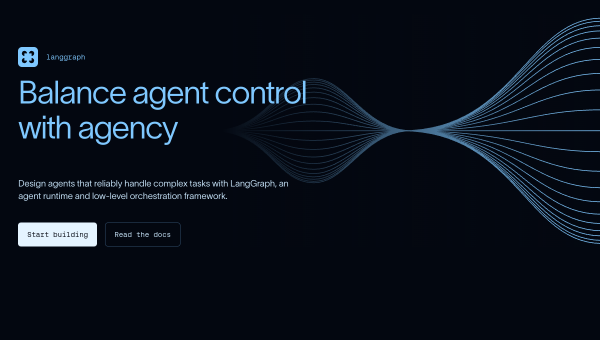
LangGraph, from LangChain, is an open-source agent orchestration framework for building reliable, stateful AI applications, providing low-level control for creating agents that handle complex tasks with customizable workflows. Its key features include human-in-the-loop controls for adding moderation and approval checkpoints, a flexible architecture for building single-agent, multi-agent, or hierarchical systems within one framework, built-in memory that maintains conversation history and context across sessions, and native streaming for token-by-token visibility into agent reasoning, designed without performance overhead. It targets developers building production-grade agents for enterprise use cases, and companies including Klarna, Lyft, Gong, Cloudflare, and LinkedIn use it for complex automation and AI experiences. It is especially suited to teams needing fine-grained control rather than generic out-of-the-box solutions, and complementary tooling (LangSmith) provides debugging, evaluation, and deployment. LangGraph is MIT-licensed and free to use.
What it does well
- Low-level control: design exactly how agents reason and act.
- Flexible architectures: single, multi-agent, or hierarchical.
- Stateful: built-in memory and native streaming.
- Open-source and free: MIT-licensed, production-proven.
Who it is for
LangGraph fits developers and engineering teams building production-grade AI agents who need fine-grained control over agent behavior, state, and workflows — rather than a generic, black-box agent. Its human-in-the-loop controls suit teams that need safety checkpoints, and its adoption by major companies signals production readiness. Non-developers, or those wanting a no-code agent builder, will find it too low-level, and building reliable agents takes engineering effort, but for developers who want control and reliability in AI agents, LangGraph is an excellent, free open-source choice.
Things to keep in mind
- It is a developer framework, not a no-code agent builder.
- Building reliable agents takes real engineering effort.
- Complementary managed tooling (LangSmith) has its own pricing.
Our verdict
LangGraph is a leading open-source framework for building AI agents, and its low-level control is exactly what production teams need: design precisely how an agent reasons, remembers, and acts, with human-in-the-loop checkpoints, flexible single- or multi-agent architectures, built-in memory, and native streaming — all without performance overhead. Adoption by companies like Klarna, Lyft, and LinkedIn signals real production readiness. It is a developer framework that takes engineering effort, but for building reliable, controllable AI agents, LangGraph is an excellent, free open-source choice.
Frequently asked questions
What is LangGraph?
LangGraph is an open-source framework from LangChain for building reliable, stateful AI agents, giving developers low-level control over agent workflows, memory, and behavior.
Is LangGraph free?
Yes, LangGraph is open-source and free under an MIT license; complementary managed tooling like LangSmith has its own pricing.
What can you build with LangGraph?
You can build single-agent, multi-agent, or hierarchical AI systems with human-in-the-loop controls, built-in memory, and native streaming.
Who is LangGraph for?
It is for developers and engineering teams building production-grade AI agents who need fine-grained control rather than a generic, out-of-the-box agent.
Top LangGraph alternatives
Other hand-reviewed AI Agents tools worth comparing against LangGraph.
AgentGPTFreemium
AgentGPT by Reworkd is a freemium AI agents and automation tool for operations managers. Our review covers what…
Auto-GPTFree
Auto-GPT by Significant Gravitas is a free AI agents and automation tool for operations managers. Our review covers…
AutoGenFree
AutoGen by Microsoft is a free AI agents and automation tool for operations managers. Our review covers what…
BabyAGIFree
BabyAGI by Yohei Nakajima is a free AI agents and automation tool for operations managers. Our review covers…
BotsonicFreemium
Botsonic by Writesonic is a freemium AI agents and automation tool for operations managers. Our review covers what…
ChatbasePaid
Chatbase is a paid AI agents and automation tool for operations managers. Our review covers what it does,…
Are you the maker of LangGraph?
Show visitors this review with the badge below. Copy the code into your site or press kit; it links straight back to this page.