Key takeaways
- Microsoft Copilot is Microsoft’s AI assistant, integrated across Windows, Microsoft 365 apps and the web.
- In Microsoft 365 it drafts in Word, analyses in Excel, summarises Outlook and Teams, and builds PowerPoint decks.
- It offers general chat, image generation and web-grounded answers; free consumer use plus paid Microsoft 365 Copilot for business.
- Its edge is Office/Windows integration; like all LLMs it can err, so verify important output.
What Microsoft Copilot is
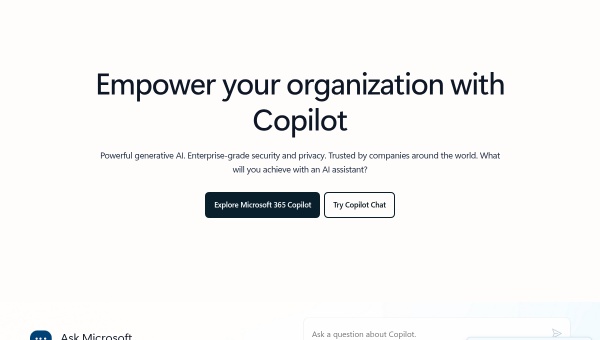
Microsoft Copilot is Microsoft’s family of AI assistants, spanning a free consumer chat assistant (in Windows, the Edge browser and the web) and Microsoft 365 Copilot, the paid version embedded directly into Office apps. Its defining characteristic is integration into the tools businesses and individuals already use every day: Word, Excel, PowerPoint, Outlook and Teams. Rather than being a separate destination, Copilot works inside your documents, spreadsheets, email and meetings, which is its core value proposition.
For the enormous number of organisations running on Microsoft 365 and Windows, that in-place integration is powerful. Copilot can draft and rewrite in Word, analyse and build formulas in Excel, summarise long email threads and meetings in Outlook and Teams, and generate PowerPoint decks — all within the apps where the work happens, drawing on your own documents and data (with enterprise data controls).
The AI features
Copilot offers general AI chat, web-grounded answers, and image generation in its consumer form, and in Microsoft 365 it brings AI into each app: drafting and editing in Word, data analysis and formula help in Excel, email and meeting summaries plus draft replies in Outlook and Teams, and slide generation in PowerPoint. Business versions can reason over an organisation’s own files and data with enterprise security and compliance controls. The consumer assistant is free; Microsoft 365 Copilot is a paid add-on for businesses and individuals.
As with every large language model, Copilot can produce confident but wrong output — incorrect summaries, flawed spreadsheet logic, or inaccurate claims — so review its work before relying on it, especially for numbers and important documents. Its enterprise version respects organisational data boundaries, but users should still follow their company’s data policies. The integration is its strength; the standard AI caveats still apply.
Strengths and limits
The strengths are deep Office and Windows integration and enterprise readiness. For anyone working in Microsoft 365, having AI inside Word, Excel, Outlook, Teams and PowerPoint — able to use their own documents with enterprise controls — is genuinely valuable and hard for standalone assistants to match. The free consumer Copilot adds general chat and image tools.
The limits: Microsoft 365 Copilot is a paid add-on whose value depends on being an Office-centric organisation, and its output — particularly Excel analysis and summaries — needs human verification. As with all AI, it can err and reflect biases. For non-Microsoft workflows, its integration edge matters less.
Who it suits
- Businesses and individuals who work daily in Microsoft 365 (Word, Excel, Outlook, Teams).
- Windows users who want a built-in AI assistant.
- Organisations wanting AI that reasons over their own files with enterprise controls.
Verdict
Microsoft Copilot’s defining strength is integration: it brings capable AI directly into Windows and the Microsoft 365 apps — Word, Excel, Outlook, Teams, PowerPoint — where enormous numbers of people already work, with enterprise data controls for business use. For Microsoft-centric users, that in-place assistance is genuinely powerful. It is a paid add-on for the full Office experience, and like all large language models it can be confidently wrong, so verify important output, especially spreadsheet logic and summaries. For anyone living in Microsoft 365, Copilot is a compelling, well-integrated choice.
Top Microsoft Copilot alternatives
Other hand-reviewed AI Assistants tools worth comparing against Microsoft Copilot.
AiseraPaid
Aisera is a paid AI assistant and chatbot tool for professionals. Our review covers what it does, pricing,…
Amazon LexPaid
Amazon Lex by Amazon Web Services is a paid AI assistant and chatbot tool for professionals. Our review…
Anakin AIFreemium
Anakin AI is a freemium AI assistant and chatbot tool for professionals. Our review covers what it does,…
AvaamoPaid
Avaamo is a paid AI assistant and chatbot tool for professionals. Our review covers what it does, pricing,…
Boost.aiPaid
Boost.ai is a paid AI assistant and chatbot tool for professionals. Our review covers what it does, pricing,…
BotpressFreemium
Botpress is a freemium AI assistant and chatbot tool for professionals. Our review covers what it does, pricing,…
Are you the maker of Microsoft Copilot?
Show visitors this review with the badge below. Copy the code into your site or press kit; it links straight back to this page.