Key Takeaways
- Tabby is an open-source, self-hosted AI coding assistant.
- It offers code completion, an answer engine, and inline chat.
- It can run on-premises or on your own hardware for privacy.
- Great for developers and teams wanting private, self-hosted AI coding.
Tabby (TabbyML) is an open-source AI coding assistant designed to bring AI into your development workflow — on your terms. Unlike proprietary cloud assistants, Tabby is self-hostable, so you can run it on-premises or on your own hardware and keep your code private. It offers code completion, an in-IDE answer engine, and inline chat across major editors. For developers and teams that want capable AI coding help without sending code to a third party, Tabby is a compelling, transparent choice.
What is Tabby?
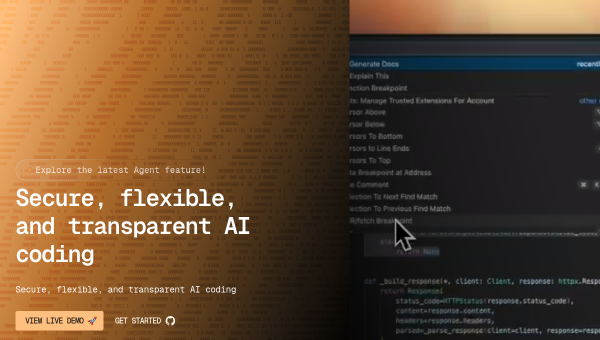
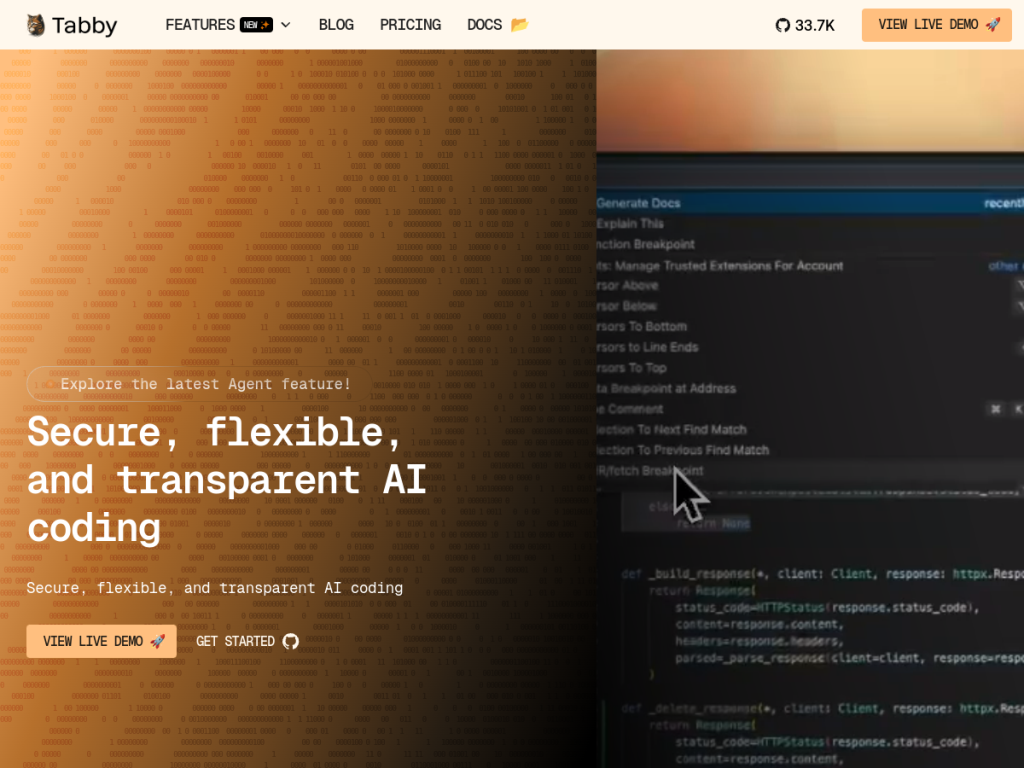
Tabby is an open-source AI coding assistant designed to bring the power of AI to your development workflow as a self-hosted alternative to proprietary assistants. Its features include AI-powered code completion that predicts your next coding move, an answer engine providing in-IDE answers to coding questions without context switching, inline chat for real-time AI conversation within your editor, and data connectors for contextual assistance from external sources. It emphasizes privacy-conscious, secure, flexible, and transparent AI coding, with deployment flexibility across cloud IDEs, on-premises, and even consumer-grade GPUs, and no mandatory external databases or cloud dependencies. Tabby supports major IDEs including VS Code, IntelliJ, Neovim, and PyCharm, and works with leading models. It offers community (open-source, free), team, and enterprise plans, and is actively developed (with newer features and model partnerships).
What it does well
- Open-source and self-hosted: run it on your own hardware.
- Private: keep code in-house, no mandatory cloud.
- Full assistant: completion, answer engine, and inline chat.
- Broad IDE support: VS Code, IntelliJ, Neovim, and more.
Who it is for
Tabby fits developers and engineering teams — especially privacy- and security-conscious ones — who want a capable AI coding assistant they can self-host on-premises or on their own hardware, keeping code private and avoiding vendor lock-in. Its open-source nature and IDE breadth suit teams that value control and transparency. Solo developers who just want a zero-setup cloud assistant may prefer hosted tools, and self-hosting requires some setup and hardware, but for private, self-hostable AI coding, Tabby is a compelling, free-to-start choice.
Things to keep in mind
- Self-hosting requires some setup and suitable hardware (a GPU helps).
- AI-generated code still requires review and testing.
- Team and enterprise features are paid beyond the open-source core.
Our verdict
Tabby is a compelling open-source AI coding assistant, and its self-hosted, privacy-first design is its defining strength: run it on-premises or on your own hardware, keep your code in-house, and avoid mandatory cloud dependencies, while getting code completion, an in-IDE answer engine, and inline chat across VS Code, IntelliJ, Neovim, and more. For privacy- and security-conscious developers and teams, that control is exactly the point. Self-hosting takes some setup and AI code needs review, but for private, self-hostable AI coding, Tabby is an excellent, free-to-start choice.
Frequently asked questions
What is Tabby?
Tabby (TabbyML) is an open-source, self-hosted AI coding assistant offering code completion, an in-IDE answer engine, and inline chat, that you can run on your own hardware for privacy.
Is Tabby open-source?
Yes, Tabby is open-source and self-hostable (free community edition), with paid team and enterprise plans for more features.
Which IDEs does Tabby support?
Tabby supports major IDEs including VS Code, IntelliJ, Neovim, and PyCharm.
Who is Tabby for?
It is for developers and teams — especially privacy- and security-conscious ones — who want a capable AI coding assistant they can self-host and keep code private.
Top Tabby alternatives
Other hand-reviewed Coding Assistants tools worth comparing against Tabby.
AiderFree
Aider is a free AI coding assistant and developer tool tool for software developers. Our review covers what…
AlphaCodeFree
AlphaCode by Google DeepMind is a free AI coding assistant and developer tool tool for software developers. Our…
Amazon Q DeveloperFreemium
Amazon Q Developer by Amazon Web Services is a freemium AI business and coding assistant tool for software…
AnacondaFree
Anaconda is a free AI coding assistant and developer tool tool for engineers. Our review covers what it…
ApplitoolsPaid
Applitools is a paid AI coding assistant and developer tool tool for engineers. Our review covers what it…
AskCodiFreemium
AskCodi is a freemium AI coding assistant and developer tool tool for software developers. Our review covers what…
Are you the maker of Tabby?
Show visitors this review with the badge below. Copy the code into your site or press kit; it links straight back to this page.