Key Takeaways
- FakeYou is an AI text-to-speech platform with celebrity and character voices.
- It hosts a large community library of voice models.
- It also offers voice-to-voice conversion and video features.
- Fun for parody — but voice cloning raises real ethical and legal issues.
FakeYou is a well-known AI voice platform built around a large, community-contributed library of celebrity and character voices — the kind of thing behind countless memes and parody clips. Type text, pick a voice, and it speaks. It is genuinely fun, and the community aspect is impressive. It also needs an honest caveat up front: synthesizing real people’s voices raises significant consent, impersonation, and rights issues, and this is a tool to use thoughtfully and lawfully.
What is Fakeyou?
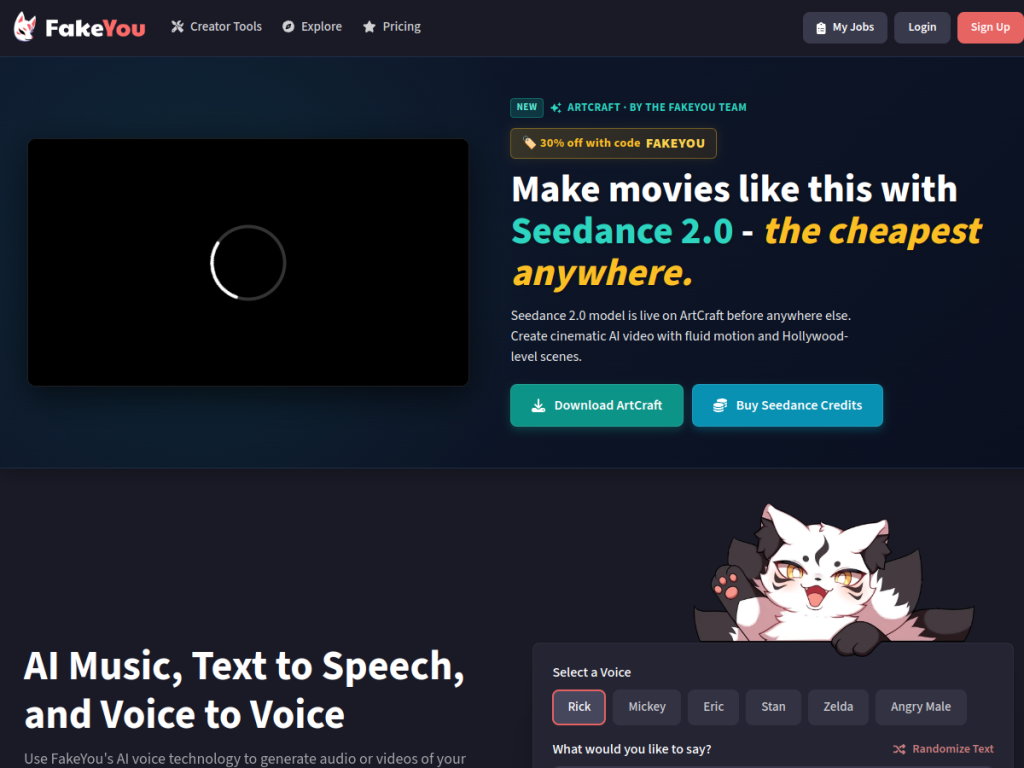
FakeYou is an AI text-to-speech and voice-cloning platform known for a large library of celebrity, cartoon, video-game, and character voices, many contributed by its community. Its core feature is text-to-speech: enter text, choose a voice model, and generate audio in that voice. It has expanded to include voice-to-voice conversion (transforming a recorded performance into another voice), and video-related features (including lip-sync/deepfake-style capabilities), plus tools for the community to train and share voice models. Free generation is available (typically with queues and limits), with paid plans offering faster generation and additional features. Its user base skews toward meme-makers, parody creators, gamers, and hobbyists. Crucially, using AI to synthesize the voices of real people raises serious ethical and legal considerations — consent, right of publicity, impersonation, and platform policies — and laws around synthetic voice and likeness continue to develop.
What it does well
- Huge voice library: celebrity, cartoon, and game voices.
- Community-driven: users train and share voice models.
- More than TTS: voice-to-voice conversion and video features.
- Free to try: generation available at no cost with queues.
Who it is for
FakeYou appeals to meme-makers, parody creators, gamers, and hobbyists who want to generate speech in recognizable character or celebrity voices for fun. The honest caveats are central, though: synthesizing a real person’s voice without consent can violate right-of-publicity laws, platform policies, and basic ethics, and it can cause real harm through impersonation or misinformation. Laws around synthetic voice and likeness are tightening. Anyone using FakeYou should stay firmly on the right side of parody, satire, and permitted use, avoid deceptive or commercial use of real voices, and never use it to impersonate someone.
Things to keep in mind
- Cloning real people’s voices raises consent, publicity-rights, and legal issues.
- Never use it to impersonate, deceive, or harass — laws are tightening.
- Free generation is queued; faster access requires paid plans.
Our verdict
FakeYou is a well-known and genuinely fun AI voice platform, with an impressive community-built library of celebrity, cartoon, and game voices, plus voice-to-voice conversion and video features, free to try. Technically it delivers what people come for. The honest caveats are inseparable from the review, though: synthesizing real people’s voices raises serious consent, right-of-publicity, and impersonation concerns, laws around synthetic voice and likeness are tightening, and misuse can cause real harm. Used strictly for lawful parody and personal fun, it is entertaining; used to deceive or impersonate, it carries real legal and ethical risk.
Frequently asked questions
What is FakeYou?
FakeYou is an AI text-to-speech and voice-cloning platform with a large community library of celebrity, cartoon, and character voices, plus voice-to-voice conversion and video features.
Is FakeYou free?
FakeYou offers free generation (typically with queues and limits), with paid plans for faster generation and more features.
Is it legal to use celebrity voices?
It depends on use and jurisdiction: synthesizing real people’s voices raises consent and right-of-publicity issues, and deceptive or commercial use can be unlawful. Laws are tightening — use only for lawful parody and never to impersonate.
Who uses FakeYou?
It is mainly used by meme-makers, parody creators, gamers, and hobbyists generating speech in recognizable voices for fun.
Top Fakeyou alternatives
Other hand-reviewed AI Voice & Audio tools worth comparing against Fakeyou.
Adobe PodcastFree Trial
Adobe Podcast is a free trial AI voice tool. Our hands-on review covers features, pricing, pros and cons,…
Camb AIFreemium
Camb AI is a freemium AI voice tool. Our hands-on review covers features, pricing, pros and cons, and…
CleanvoiceFreemium
Cleanvoice is a freemium AI voice tool. Our hands-on review covers features, pricing, pros and cons, and who…
FinesharePaid
Fineshare is a paid AI voice tool. Our hands-on review covers features, pricing, pros and cons, and who…
Fish AudioPaid
Fish Audio is a paid AI voice tool. Our hands-on review covers features, pricing, pros and cons, and…
Lalal.aiFreemium
Lalal.ai is a freemium AI voice tool. Our hands-on review covers features, pricing, pros and cons, and who…
Are you the maker of Fakeyou?
Show visitors this review with the badge below. Copy the code into your site or press kit; it links straight back to this page.