Key Takeaways
- ZeroGPT is a popular AI content detector with a suite of related tools.
- It flags likely AI-generated text and highlights the suspect sentences.
- It also offers a humanizer, plagiarism checker, paraphraser, and more.
- Handy as a quick check — but AI detection is unreliable, so never treat it as proof.
ZeroGPT is one of the more widely used AI content detectors, aiming to tell you whether text was written by a language model like ChatGPT or Gemini. It highlights the sentences it thinks are AI-generated and bundles a range of related tools — a humanizer, plagiarism checker, paraphraser, and more. It is genuinely popular, but like all AI detectors, it comes with an important caveat about reliability.
What is ZeroGPT?
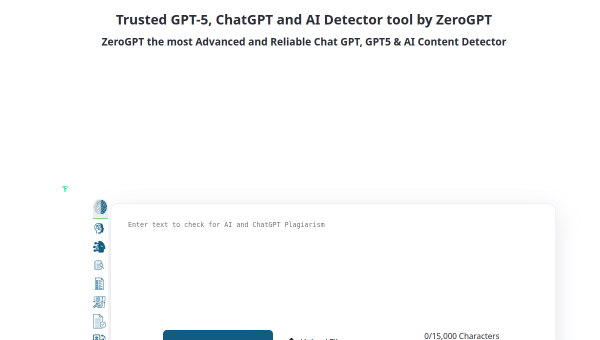
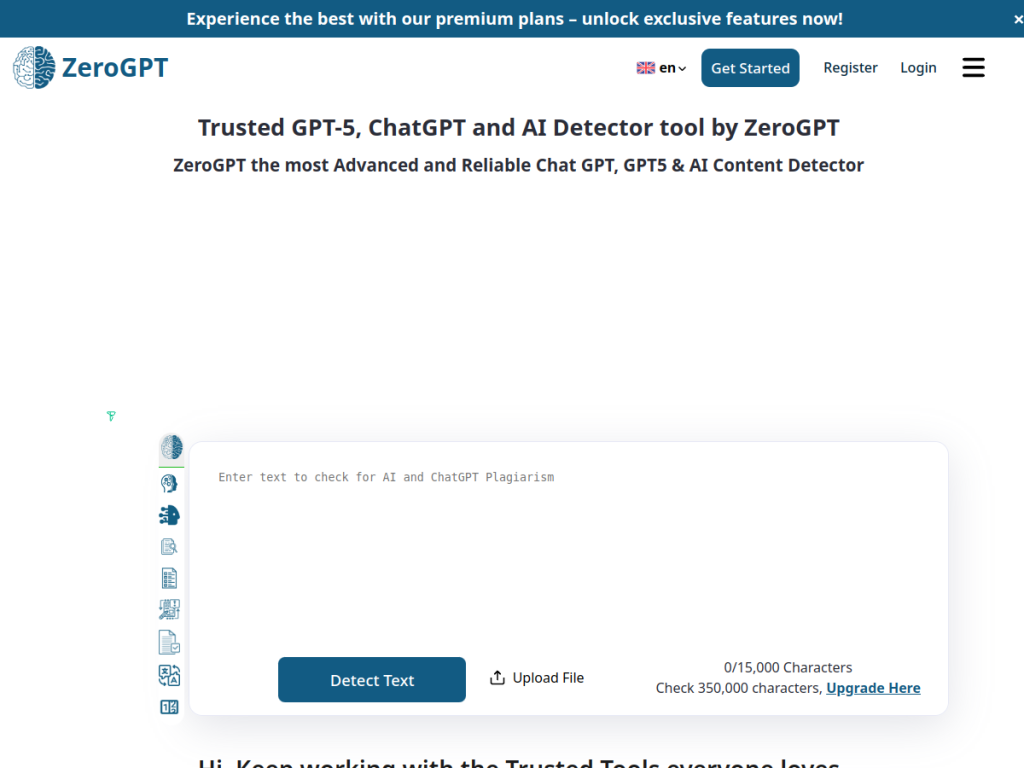
ZeroGPT is an AI detection platform that identifies content generated by models like ChatGPT, GPT-5, and Gemini, using what it calls DeepAnalyse technology and highlighting the specific sentences it flags as AI-generated. Around the detector it offers a suite of tools: an AI Humanizer that rewrites AI text to sound more natural, a plagiarism checker, an AI paraphraser and summarizer, a grammar and spelling checker, image detection for AI-generated photos, translation and word-counter utilities, and even WhatsApp and Telegram bot integrations. It claims support for many languages and offers free basic detection, with premium tiers and an API for organizations. It is important to understand, however, that AI content detection across the entire industry is unreliable — producing both false positives and false negatives — so ZeroGPT’s results, like any detector’s, should be treated as a rough signal rather than proof.
What it does well
- Quick detection: flags likely AI text and highlights suspect sentences.
- Tool suite: humanizer, plagiarism checker, paraphraser, and more.
- Accessible: free basic detection with an API for organizations.
- Broad utility: image detection and messaging-bot integrations.
Who it is for
ZeroGPT appeals to educators, writers, editors, and businesses who want a quick way to check whether text might be AI-generated, or to use its related writing tools. It can be a useful rough signal in a workflow. But it is crucial to use it responsibly: because AI detection is unreliable industry-wide, no one should treat a detector’s verdict as definitive proof — especially for consequential decisions like accusing a student of cheating. For a quick, informal check with that caveat firmly in mind, ZeroGPT is a handy, free-to-start tool.
Things to keep in mind
- AI detection is unreliable across the industry — false positives and negatives are common.
- Never treat a detector’s result as proof, especially for consequential decisions.
- Higher-volume detection and advanced features require premium plans.
Our verdict
ZeroGPT is a popular, accessible AI detector with a broad suite of writing and detection tools, and as a quick, informal signal it can be handy. But honesty requires the big caveat: AI content detection is fundamentally unreliable across the whole industry, prone to both false positives and false negatives, so ZeroGPT’s verdicts — like any detector’s — must never be treated as proof, particularly for high-stakes decisions like academic misconduct. Used as a rough check with that firmly understood, ZeroGPT is a usable, free-to-start tool; relied on as definitive, it can do real harm.
Frequently asked questions
What is ZeroGPT?
ZeroGPT is an AI content detector that flags text likely written by models like ChatGPT and Gemini, highlighting suspect sentences, alongside tools like a humanizer, paraphraser, and plagiarism checker.
Is ZeroGPT accurate?
AI content detection is unreliable across the entire industry, producing false positives and false negatives, so ZeroGPT’s results should be treated as a rough signal, never as definitive proof.
Is ZeroGPT free?
Yes, free basic AI detection is available, with premium plans and an API adding more capacity and features.
Should I use ZeroGPT to catch cheating?
Only with great caution. Because AI detectors are unreliable, their results must not be used as proof of misconduct; a flagged result should prompt a conversation, not an accusation.
Top ZeroGPT alternatives
Other hand-reviewed Writing Assistants tools worth comparing against ZeroGPT.
AI21 LabsPaid
AI21 Labs is a paid AI marketing and writing assistant tool for writers and marketers. Our review covers…
AnywordPaid
Anyword is a paid AI marketing and writing assistant tool for writers and marketers. Our review covers what…
Article ForgePaid
Article Forge by Glimpse is a paid AI marketing and writing assistant tool for writers and marketers. Our…
BlogelyPaid
Blogely is a paid AI marketing and writing assistant tool for writers and marketers. Our review covers what…
BywordPaid
Byword is a paid AI marketing and writing assistant tool for writers and marketers. Our review covers what…
ChatGPTFreemium
ChatGPT by OpenAI is a freemium AI assistant and chatbot tool for writers and marketers. Our review covers…
Are you the maker of ZeroGPT?
Show visitors this review with the badge below. Copy the code into your site or press kit; it links straight back to this page.