Table of Contents
Want to get better at Data Analysis without spending hours on it? This beginner-friendly guide shows you exactly how to use Cursor for Data Analysis — from first setup to a polished result — with a simple, repeatable process you can reuse every time.
Why Use Cursor for Data Analysis?
Cursor is well suited to Data Analysis because it handles the repetitive, structured parts quickly while leaving the creative decisions to you. Instead of staring at a blank page, you start from a solid draft and refine from there.
What You Will Learn
- Understand what Cursor does best for Data Analysis.
- Set up a repeatable Data Analysis workflow using Cursor.
- Write effective prompts that get usable results the first time.
- Avoid the common mistakes beginners make with Data Analysis.
Before You Start
A free or paid Cursor account and a real Data Analysis task you want to complete. No prior experience with AI is required.
Cursor Tutorial: Step by Step
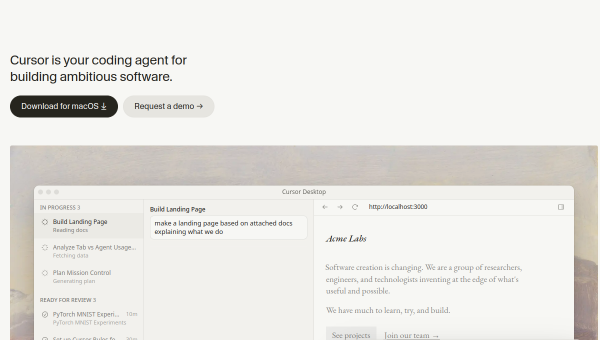
- Set up Cursor: Create your account, open Cursor, and get familiar with where you type your request and where the output appears.
- Describe the task clearly: Tell Cursor exactly what you want for your Data Analysis — the goal, the tone, the format, and any constraints. Specific inputs produce far better output.
- Generate a first draft: Run your prompt and review the first result against what you actually need. Treat it as a starting point, not the finished product.
- Refine with follow-ups: Ask Cursor to adjust — shorter, more formal, more examples. A couple of quick follow-ups usually gets you to a strong result.
- Review and finalise: Fact-check anything important, add your own voice, and finalise. AI speeds up Data Analysis, but your judgement is what makes it publishable.
Tips for Better Results
- Start with a clear goal before you open Cursor.
- Give an example of the output you want — it dramatically improves quality.
- Iterate in small steps rather than expecting a perfect first answer.
- Always review AI output for accuracy before you use it.
Common Mistakes to Avoid
The biggest mistake is being vague — a one-line request gives generic output. The second is trusting the result blindly; always review Data Analysis output before publishing. Finally, do not switch tools constantly: learn Cursor well before adding others.
Frequently Asked Questions
Is Cursor free to use for Data Analysis?
Cursor offers a free tier that is enough to learn and handle light Data Analysis work. Heavier or professional use may need a paid plan for higher limits and better output.
How long does it take to learn Data Analysis with Cursor?
Most people get a usable result on their first session. Getting consistently great results takes a few tries as you learn how to phrase your requests.
Do I need technical skills?
No. If you can describe what you want in plain language, you can use Cursor for Data Analysis. This guide assumes no prior experience.
What you will learn
- Understand what Cursor does best for Data Analysis. Set up a repeatable Data Analysis workflow using Cursor. Write effective prompts that get usable results the first time. Avoid the common mistakes beginners make with Data Analysis.
Prerequisites
- A free or paid Cursor account and a real Data Analysis task you want to complete. No prior experience with AI is required.
Tutorial steps
- Set up Cursor — Create your account, open Cursor, and get familiar with where you type your request and where the output appears.
- Describe the task clearly — Tell Cursor exactly what you want for your Data Analysis — the goal, the tone, the format, and any constraints. Specific inputs produce far better output.
- Generate a first draft — Run your prompt and review the first result against what you actually need. Treat it as a starting point, not the finished product.
- Refine with follow-ups — Ask Cursor to adjust — shorter, more formal, more examples. A couple of quick follow-ups usually gets you to a strong result.
- Review and finalise — Fact-check anything important, add your own voice, and finalise. AI speeds up Data Analysis, but your judgement is what makes it publishable.
Frequently asked questions
Is Cursor free to use for Data Analysis?
Cursor offers a free tier that is enough to learn and handle light Data Analysis work. Heavier or professional use may need a paid plan for higher limits and better output.
How long does it take to learn Data Analysis with Cursor?
Most people get a usable result on their first session. Getting consistently great results takes a few tries as you learn how to phrase your requests.
Do I need technical skills?
No. If you can describe what you want in plain language, you can use Cursor for Data Analysis. This guide assumes no prior experience.
Why this matters in 2026
The pace of AI keeps accelerating, and the gap between teams that adopt the right approach early and those that wait is widening. Getting comfortable with Getting Started now means fewer manual steps, more consistent output, and time returned to the work that actually needs a human. It is less about chasing every new release and more about building a repeatable process you can trust.
How to get the most out of it
Start small and specific. Pick one real task, run it end to end, and compare the result against what you would have produced manually. Once the quality is there, document the steps so the rest of your team can follow the same path. Treat the first week as calibration: tweak your inputs, note what works, and lock in the settings that give you dependable results.
- Define the outcome before you start, not halfway through.
- Keep a short checklist so results stay consistent across people.
- Review the output — automation speeds up the work, judgement still matters.
- Revisit your setup every few weeks as tools and features change.
Quick answers before you start
Is this beginner friendly?
Yes. You do not need a technical background to get started — a clear goal and a willingness to iterate are enough. Most people see useful results within their first few attempts.
How long before I see results?
Usually fast. Because you are starting from a proven structure rather than a blank page, the first useful output often arrives in minutes, with quality improving as you refine your inputs.
What should I watch out for?
Avoid using it for tasks outside its strengths, and always fact-check anything you plan to publish. Used within its lane and reviewed sensibly, it is dependable and a genuine time-saver.
Getting Started: key takeaways
The bottom line on Getting Started is simple: match it to a clear, concrete task and you will see value quickly. Used consistently, it removes busywork and keeps your output steady, while leaving the final judgement calls to you.
In practice, Getting Started rewards a little upfront clarity — decide the outcome you want first, then let the tooling handle the repetitive parts.
If you are weighing your options, judge Getting Started on how well it fits your real workflow rather than a feature checklist.
A quick tip: start with one small task, confirm the quality, then scale up once you trust the output of Getting Started.
In practice, Getting Started rewards a little upfront clarity — decide the outcome you want first, then let the tooling handle the repetitive parts.
If you are weighing your options, judge Getting Started on how well it fits your real workflow rather than a feature checklist.
A quick tip: start with one small task, confirm the quality, then scale up once you trust the output of Getting Started.
In practice, Getting Started rewards a little upfront clarity — decide the outcome you want first, then let the tooling handle the repetitive parts.
If you are weighing your options, judge Getting Started on how well it fits your real workflow rather than a feature checklist.
A quick tip: start with one small task, confirm the quality, then scale up once you trust the output of Getting Started.
In practice, Getting Started rewards a little upfront clarity — decide the outcome you want first, then let the tooling handle the repetitive parts.
If you are weighing your options, judge Getting Started on how well it fits your real workflow rather than a feature checklist.
A quick tip: start with one small task, confirm the quality, then scale up once you trust the output of Getting Started.
In practice, Getting Started rewards a little upfront clarity — decide the outcome you want first, then let the tooling handle the repetitive parts.
If you are weighing your options, judge Getting Started on how well it fits your real workflow rather than a feature checklist.
A quick tip: start with one small task, confirm the quality, then scale up once you trust the output of Getting Started.
In practice, Getting Started rewards a little upfront clarity — decide the outcome you want first, then let the tooling handle the repetitive parts.
If you are weighing your options, judge Getting Started on how well it fits your real workflow rather than a feature checklist.
Related resources
- Cursor
- ChatGPT Prompt: Outline neighborhood guide for students
- Code Review Helper
- Optimize follow-up for researchers
- More in Data & Analytics
Want the source detail? Explore the this overview of artificial intelligence for the latest specifics.