Key Takeaways
- Asana is a leading work-management platform for coordinating projects, tasks, and goals.
- Its AI layer adds AI teammates (agents), AI Studio for no-code automation, and an AI Chief of Staff view.
- The Work Graph connects tasks, projects, goals, and dependencies so AI has real context to act on.
- Great for teams that want structured work plus AI assistance; power comes with a learning curve.
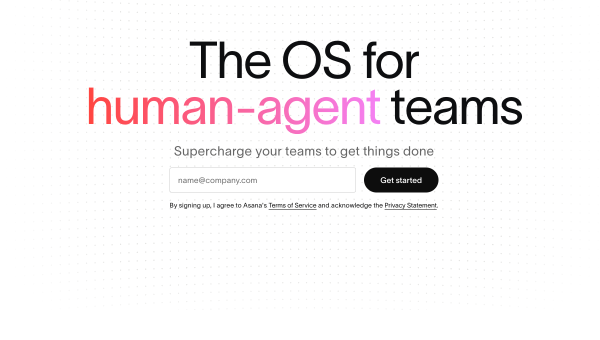
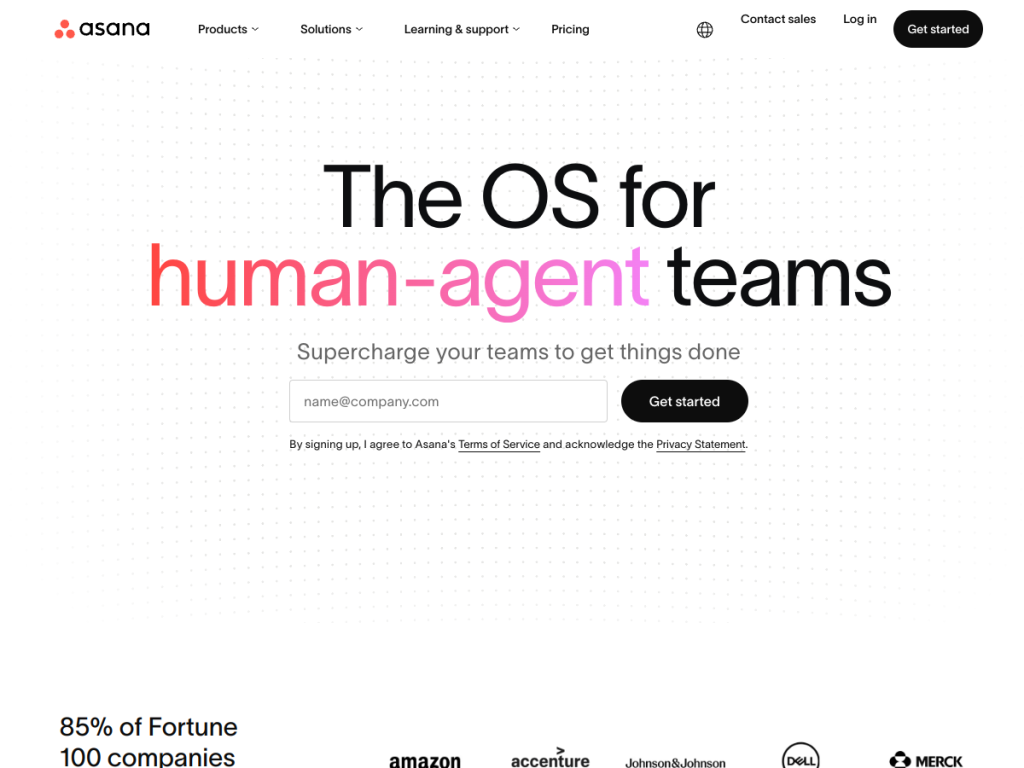
Asana is one of the best-known work-management platforms, used to plan projects, track tasks, and connect daily work to company goals. It has leaned hard into AI, layering agents and automation on top of its structured foundation — positioning itself as an operating system for teams where people and AI “teammates” work side by side.
What is Asana?
Asana is a collaborative work-management platform that helps teams organize and execute work, from individual tasks to cross-company initiatives. Its structural advantage is the Work Graph, which maps how tasks, projects, goals, owners, and dependencies relate — giving AI features real context rather than isolated prompts. On top of that sit AI teammates (pre-built agents for things like status reporting, workflow optimization, and data quality), AI Studio (a no-code builder for automating workflows), and Asana Dash, an AI “chief of staff” view. The platform emphasizes shared memory so agents learn from completed work, reducing repetitive context-setting. It is trusted at scale, with a large share of the Fortune 100 among its customers.
What it does well
- Structured foundation: the Work Graph gives AI genuine context about how work connects.
- AI teammates: pre-built agents handle recurring coordination and reporting tasks.
- No-code automation: AI Studio lets teams build workflows without engineering.
- Proven at scale: widely adopted by large enterprises for complex coordination.
Who it is for
Asana fits teams and organizations that need to coordinate work across people and projects — from marketing and operations to product and cross-functional programs. Its AI features are most valuable to teams already running structured workflows who want to automate reporting and routine coordination. Individuals get a capable free plan; larger organizations get the automation, agents, and governance that justify the paid tiers. Teams wanting only a simple to-do list may find it more than they need.
Things to keep in mind
- The most useful AI and automation features sit on the paid Starter, Advanced, and Enterprise plans.
- The platform’s depth means a learning curve before teams use it fully.
- AI teammates work best once your projects are well structured in Asana.
Our verdict
Asana remains a top-tier work-management platform, and its AI direction is more substantial than bolt-on chat: because the Work Graph gives agents real context, features like AI teammates and AI Studio can actually take work off people’s plates. There is a learning curve, and the best AI capabilities require paid plans, but for teams serious about coordinating complex work — and willing to structure it well — Asana is one of the strongest choices, with a free tier to start.
Frequently asked questions
What is Asana used for?
Asana is a work-management platform used to plan projects, track tasks, and connect work to goals, with AI features that automate coordination and reporting.
What AI features does Asana have?
Asana offers AI teammates (pre-built agents), AI Studio for no-code workflow automation, and Asana Dash, an AI chief-of-staff view, all grounded in its Work Graph.
Is Asana free?
Yes, there is a free Personal plan for individuals and small teams. Paid Starter, Advanced, and Enterprise tiers add the fuller AI and automation capabilities.
What is the Asana Work Graph?
The Work Graph is Asana’s data model connecting tasks, projects, goals, owners, and dependencies, giving its AI features real context to act on.
Top Asana alternatives
Other hand-reviewed Productivity tools worth comparing against Asana.
Abnormal SecurityPaid
Abnormal Security by Abnormal AI is a paid AI business and productivity tool for business teams. Our review…
Adobe Acrobat AIFreemium
Adobe Acrobat AI is a freemium AI business and ocr tool for document-heavy teams. Our review covers what…
AirtableFreemium
Airtable is a freemium AI business and productivity tool for knowledge workers. Our review covers what it does,…
AlmanacPaid
Almanac is a paid AI business and productivity tool for knowledge workers. Our review covers what it does,…
Automation AnywherePaid
Automation Anywhere is a paid AI business and productivity tool for business teams. Our review covers what it…
AvomaPaid
Avoma is a paid AI meeting assistant and productivity tool for meeting-heavy teams. Our review covers what it…
Asana vs the competition
Are you the maker of Asana?
Show visitors this review with the badge below. Copy the code into your site or press kit; it links straight back to this page.