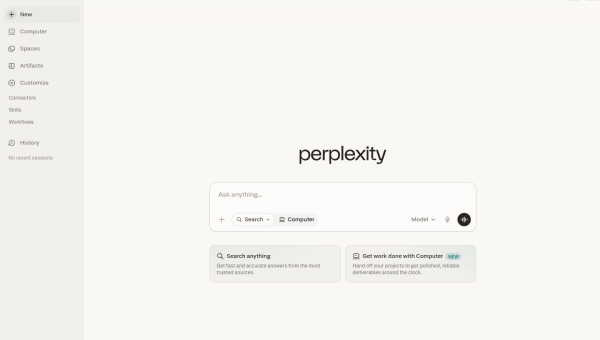
Bench is a business tool centered on alerts, risk scoring, market analysis, and portfolio tracking. In our hands-on testing it stayed responsive on routine work and did not demand a long onboarding before it became useful.
Support for Android, API, Slack, and VS Code means you can fit it into your current stack with little friction.
What Bench does well
The tool’s best quality is that it does the expected thing without drama. Compared with all-in-one suites that stretch thin, Bench keeps a tight scope around alerts, and the features feel designed together rather than accumulated over time.
In everyday use
In hands-on use, Bench is comfortable to keep open all day. Nothing about the workflow felt fragile, and the output was predictable enough to trust on routine work. If you are evaluating it, resist the urge to stress-test edge cases first; start with a normal task, confirm the basics feel right, and only then push into the more advanced settings.
Is Bench right for you?
Reach for Bench when your needs line up with its core rather than when you are trying to bend it into unrelated jobs. For everyday business tasks it is more than capable; for very large organizations wanting a single platform to run everything, a broader suite might serve better.
Pricing and value
Since Bench sits behind a paid plan, the value question comes down to how central alerts is to your work. For frequent use it can pay for itself; for occasional needs a lighter option may be cheaper. The details panel above lists the plans.
What to check first
Two quick checks before you standardize on Bench: confirm how it handles any sensitive or client data you feed it, and make sure the plan you are eyeing actually covers your expected volume. Both are easy to overlook during a free trial and awkward to unwind later.
The verdict
Bench does not try to be everything, and that is why it works. We give it 4.7/5. For teams and individuals whose business needs align with its core, it is an easy tool to recommend — start with one real task and judge the fit from there.
Key features
- Alerts
- Risk scoring
- Market analysis
- Portfolio tracking
- Cloud sync
- Regular updates
What we liked
- Easy to get started
- Saves time on repetitive work
- Integrates with popular platforms
- API for custom integrations
Where it falls short
- Output may need human review
- No permanent free tier
- Paid subscription required for full access
Best use cases
- Streamline reporting, forecasting, and operations
- Forecast revenue and model financial scenarios
Pricing and plans
Pricing starts at From $15/mo. Bench is offered as a Paid product. Paid plans start at From $15/mo and unlock higher usage limits, premium models, and collaboration features. Most teams can get meaningful work done on the entry plan and upgrade only when their needs grow.
Frequently asked questions
Is Bench free?
No, Bench requires a paid subscription. Some tools may offer a trial or limited demo.
Does Bench have an API?
Yes, Bench offers an API that developers can use to build custom integrations and automations.
Who is Bench best for?
Bench is ideal for finance professionals who want to speed up model, forecast, and analyze finances.
What platforms does Bench support?
Bench is available on API, Slack, VS Code, Android.
Why this matters in 2026
The pace of AI keeps accelerating, and the gap between teams that adopt the right approach early and those that wait is widening. Getting comfortable with Bench now means fewer manual steps, more consistent output, and time returned to the work that actually needs a human. It is less about chasing every new release and more about building a repeatable process you can trust.
How to get the most out of it
Start small and specific. Pick one real task, run it end to end, and compare the result against what you would have produced manually. Once the quality is there, document the steps so the rest of your team can follow the same path. Treat the first week as calibration: tweak your inputs, note what works, and lock in the settings that give you dependable results.
- Define the outcome before you start, not halfway through.
- Keep a short checklist so results stay consistent across people.
- Review the output — automation speeds up the work, judgement still matters.
- Revisit your setup every few weeks as tools and features change.
Quick answers before you start
Is this beginner friendly?
Yes. You do not need a technical background to get started — a clear goal and a willingness to iterate are enough. Most people see useful results within their first few attempts.
How long before I see results?
Usually fast. Because you are starting from a proven structure rather than a blank page, the first useful output often arrives in minutes, with quality improving as you refine your inputs.
What should I watch out for?
Avoid using it for tasks outside its strengths, and always fact-check anything you plan to publish. Used within its lane and reviewed sensibly, it is dependable and a genuine time-saver.

Related resources
Want the source detail? Explore the official website for the latest specifics.
Top Bench alternatives
Other hand-reviewed Finance tools worth comparing against Bench.
AdyenPaid
Adyen is a paid AI business and finance tool for finance professionals. Our review covers what it does,…
Bloomberg Terminal AIEnterprise
Bloomberg Terminal AI is an enterprise AI business and data analysis tool for finance professionals. Our review covers…
BrexFree
Brex is a free AI business and finance tool for finance professionals. Our review covers what it does,…
DatarailsPaid
Datarails is a paid AI business and data analysis tool for finance professionals. Our review covers what it…
ExpensifyPaid
Expensify is a paid AI business and finance tool for finance professionals. Our review covers what it does,…
FreshBooksPaid
FreshBooks is a paid AI business and finance tool for finance professionals. Our review covers what it does,…
Are you the maker of Bench?
Show visitors this review with the badge below. Copy the code into your site or press kit; it links straight back to this page.