Key Takeaways
- Anaconda is the leading Python platform for data science, machine learning, and AI development.
- It bundles curated, security-scanned packages with environment and dependency management.
- Newer platform features add AI workflow orchestration, code assistance, and team collaboration.
- Free for individuals; paid Business tiers add governance and security for enterprises.
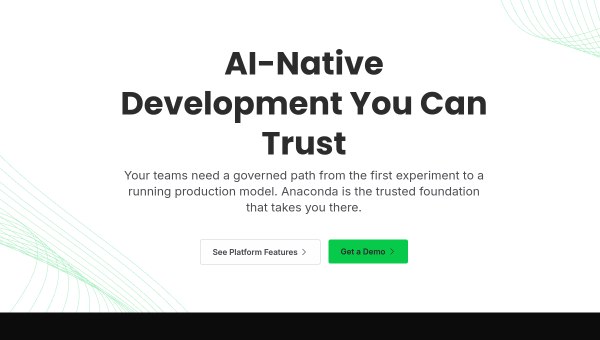
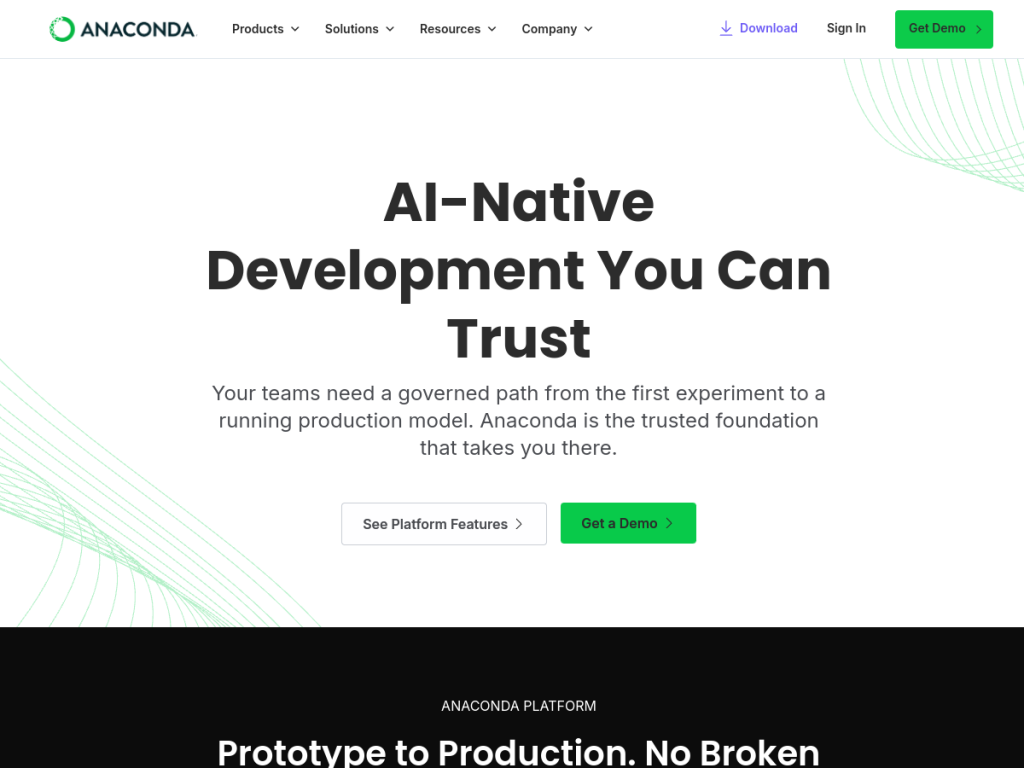
Anaconda is a cornerstone of the Python data-science world — the distribution millions of developers, data scientists, and researchers rely on to manage packages and environments. It has grown from a package manager into a broader AI development platform, adding curated and security-scanned packages, workflow orchestration, code assistance, and collaboration tools aimed at taking projects from first experiment to production.
What is Anaconda?
Anaconda is an AI and data-science platform built on open-source Python. At its core is package and environment management: thousands of validated, security-scanned packages that let teams reproduce environments reliably and avoid dependency conflicts. Around that core, the modern Anaconda platform adds AI orchestration for building and scaling production workflows with traceability and observability, developer code assistance, and team collaboration features. The free tier serves individuals and learners, while Business licensing adds the security scanning, governance, and support that regulated enterprises need — which is why a large share of Fortune 500 companies use it.
What it does well
- Package management: the de facto standard for reliable, reproducible Python environments.
- Security and governance: validated, scanned packages and enterprise controls.
- Broad ecosystem: works with the full open-source data-science and ML stack.
- Free to start: individuals and students can use it at no cost.
Who it is for
Anaconda fits data scientists, ML engineers, researchers, and students working in Python — anyone who needs dependable environments and access to the scientific-computing ecosystem. For enterprises, its value is governance: knowing which packages are vetted and secure across many teams. Individuals get a capable free platform; regulated organizations get the controls that make open-source Python safe to use at scale.
Things to keep in mind
- The most valuable governance and security features sit behind paid Business licensing.
- Commercial use of the default repository has licensing terms worth reviewing for larger organizations.
- It is a platform for building, not a point-and-click app — you still write the Python.
Our verdict
Anaconda is close to essential for serious Python data-science and AI work. Its package and environment management alone save countless hours of dependency headaches, and the added orchestration, security, and collaboration features make it a genuine platform rather than just a distribution. Individuals get a lot for free; enterprises pay for governance and support that are hard to replicate. If your work runs on Python, Anaconda is one of the safest foundations to build on.
Frequently asked questions
What is Anaconda used for?
Anaconda is used for Python-based data science, machine learning, and AI development — managing packages and environments and, in the broader platform, orchestrating and scaling AI workflows.
Is Anaconda free?
Yes, there is a free tier for individuals and small-scale use. Starter and Business licenses add governance, security scanning, and support for organizations.
Why do enterprises use Anaconda?
Enterprises value its curated, security-scanned packages and governance controls, which make open-source Python safe and reproducible across many teams.
Does Anaconda have AI features?
Yes. Beyond package management, the platform adds AI workflow orchestration with traceability and observability, plus developer code assistance and collaboration tools.
Top Anaconda alternatives
Other hand-reviewed Coding Assistants tools worth comparing against Anaconda.
AiderFree
Aider is a free AI coding assistant and developer tool tool for software developers. Our review covers what…
AlphaCodeFree
AlphaCode by Google DeepMind is a free AI coding assistant and developer tool tool for software developers. Our…
Amazon Q DeveloperFreemium
Amazon Q Developer by Amazon Web Services is a freemium AI business and coding assistant tool for software…
ApplitoolsPaid
Applitools is a paid AI coding assistant and developer tool tool for engineers. Our review covers what it…
AskCodiFreemium
AskCodi is a freemium AI coding assistant and developer tool tool for software developers. Our review covers what…
Azure MLPaid
Azure ML by Microsoft Azure is a paid AI coding assistant and developer tool tool for engineers. Our…
Are you the maker of Anaconda?
Show visitors this review with the badge below. Copy the code into your site or press kit; it links straight back to this page.