Key takeaways
- Aidoc is a clinical AI platform that analyses medical imaging to flag and prioritise urgent findings for care teams.
- It has a large portfolio of FDA-cleared algorithms across radiology, cardiology, neurovascular and vascular care.
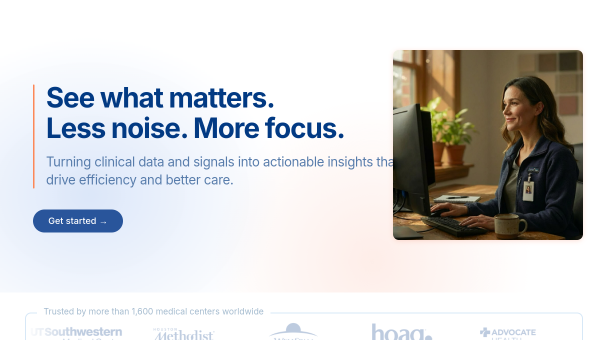
- Its aiOS platform integrates into hospital IT and coordinates care, used by 1,600+ medical centers.
- AI flags are assistive triage, not diagnoses — physicians remain responsible for interpretation and decisions.
What Aidoc is
Aidoc is a clinical AI platform that turns medical imaging into actionable, prioritised insights for care teams. Its core function is analysing scans — CT and others — to detect and flag suspected urgent findings (such as pulmonary embolism, stroke or intracranial haemorrhage) and route notifications to the right clinicians fast, so time-critical cases move to the front of the queue. It runs on a proprietary enterprise platform (aiOS) that integrates into existing hospital IT, and it holds one of the largest portfolios of FDA-cleared algorithms in the field, used by more than 1,600 medical centres worldwide.
The value is speed on time-sensitive conditions. In emergencies like stroke or PE, minutes matter, and AI that flags a suspicious scan immediately — rather than waiting in a reading queue — can accelerate the path to treatment. Aidoc’s FDA clearances and broad hospital adoption reflect that it operates as regulated medical software, not an experimental tool.
The AI features and patient-safety caveats
Aidoc provides automated image analysis that prioritises findings, streamlined notification workflows that connect care teams across specialties, and patient-management tools that track patients through the care journey, all on the aiOS platform. The breadth of FDA-cleared algorithms across specialties is central to its enterprise value.
The essential caveat: Aidoc’s AI is an assistive triage and prioritisation tool, not a diagnostic authority. It flags suspected findings to accelerate review, but the interpreting physician (typically a radiologist) remains responsible for the actual diagnosis and clinical decisions. AI can produce false positives and false negatives, so it must augment, not replace, expert reading — clinicians should never assume an unflagged scan is clear or accept a flag without their own review. FDA clearance means it met a regulatory bar for its intended use, but safe deployment still depends on physician oversight and appropriate workflows. Used that way, Aidoc speeds care; used as a substitute for expert judgement, it would be dangerous.
Strengths and limits
The strengths are speed on urgent findings, regulatory rigour and enterprise integration. A large portfolio of FDA-cleared algorithms that prioritise time-critical cases and coordinate care, integrated into hospital IT at scale, delivers real value where minutes matter. Broad adoption reflects genuine clinical trust.
The limits: it is enterprise medical software requiring implementation, and its AI is assistive triage that can err (false positives/negatives), so physician interpretation and oversight remain essential. It supports specific findings and specialties rather than everything. Its benefits depend on clinicians using it to augment, not replace, expert reading.
Who it suits
- Hospitals and health systems wanting to accelerate detection of urgent imaging findings.
- Radiology, cardiology and neurovascular teams needing prioritisation and care coordination.
- Organisations that will deploy AI triage with physician oversight and clear workflows.
Verdict
Aidoc is a leading clinical AI platform that uses a large portfolio of FDA-cleared algorithms to flag and prioritise urgent imaging findings and coordinate care, accelerating treatment where minutes matter and earning adoption at 1,600+ medical centres. Crucially, its AI is assistive triage, not a diagnosis: interpreting physicians remain responsible, and the tool can produce false positives and negatives, so it must augment expert reading rather than replace it. Deployed with that physician oversight, Aidoc is a valuable, regulated tool for speeding time-critical care.
Top Aidoc alternatives
Other hand-reviewed Healthcare tools worth comparing against Aidoc.
Ada HealthFree
Ada Health is a free AI education and healthcare tool for healthcare providers. Our review covers what it…
Buoy HealthFree
Buoy Health is a free AI education and healthcare tool for healthcare providers. Our review covers what it…
MerativePaid
Merative is a paid AI healthcare and research tool for healthcare providers. Our review covers what it does,…
Paige AIPaid
Paige AI is a paid AI healthcare and research tool for healthcare providers. Our review covers what it…
PathAIEnterprise
PathAI is an enterprise AI data analysis and healthcare tool for healthcare providers. Our review covers what it…
TempusEnterprise
Tempus is an enterprise AI data analysis and healthcare tool for healthcare providers. Our review covers what it…
Are you the maker of Aidoc?
Show visitors this review with the badge below. Copy the code into your site or press kit; it links straight back to this page.