Key Takeaways
- Logseq is a privacy-first, open-source knowledge base and outliner.
- It stores notes as local plain-text/markdown files you own.
- It links notes with backlinks and a graph view for connected thinking.
- Great for note-takers who want a private, local-first knowledge tool.
Logseq is a privacy-first, open-source knowledge base built around outlining and connected notes. Unlike cloud note apps, it stores your notes as local plain-text and markdown files that you own and control, and it links ideas together with backlinks and a graph view — helping you build a personal knowledge network over time. For note-takers, researchers, and students who value privacy, ownership, and connected thinking, Logseq is a beloved, free option.
What is Logseq?
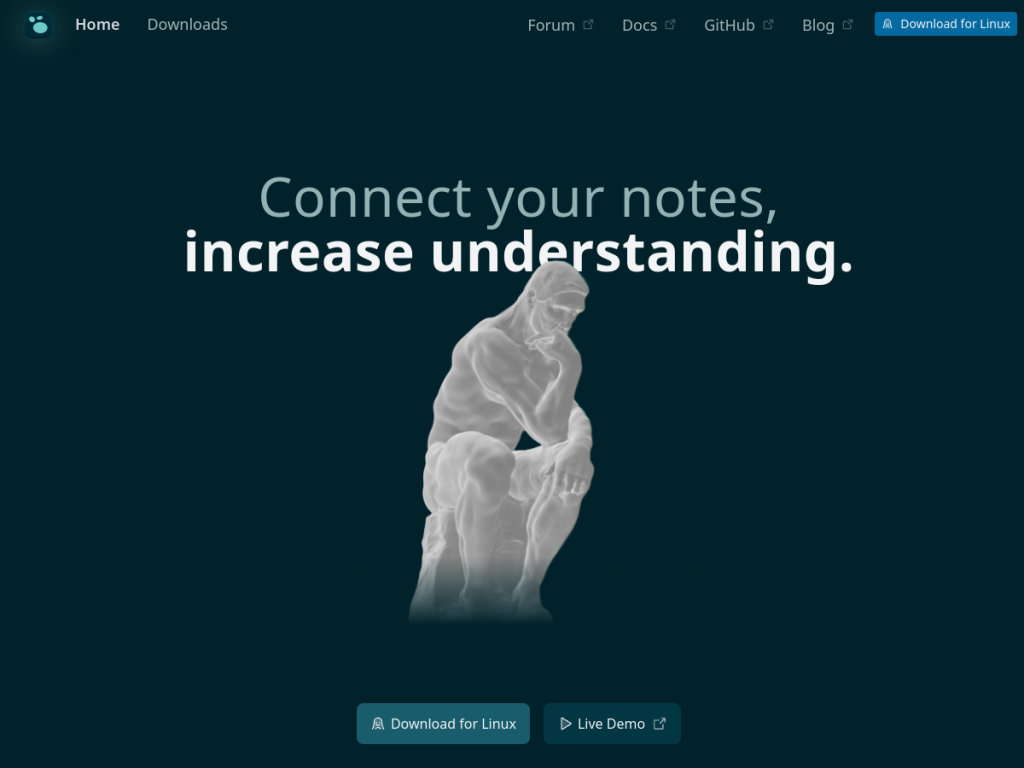
Logseq is a privacy-first, open-source knowledge base and outliner for taking and connecting notes. It is local-first: your notes are stored as plain-text and markdown files on your own device, so you own your data rather than locking it into a proprietary cloud. As an outliner, it organizes thoughts in bulleted, nestable blocks, and it emphasizes networked note-taking through bidirectional links (backlinks) and a graph view that visualizes how your notes connect, encouraging a personal knowledge graph. It supports features common to modern knowledge tools — daily journals, page and block references, tags, queries, and PDF annotation — and has an active community and plugin ecosystem (including AI-related plugins). Logseq is free and open-source; an optional paid Logseq Sync service provides encrypted syncing across your devices. It appeals to those who value privacy, data ownership, and connected, long-term knowledge management.
What it does well
- Local-first and private: your notes stay in files you own.
- Connected notes: backlinks and a graph view.
- Open-source: free, with an active community and plugins.
- Outliner: fast, structured, block-based note-taking.
Who it is for
Logseq fits note-takers, researchers, students, and knowledge workers who want a private, local-first, open-source tool to build a connected knowledge base — and who value owning their data as plain-text files rather than trusting a proprietary cloud. Its backlinks and graph view suit those who like networked, long-term note-taking. People who prefer a polished, fully managed cloud app with minimal setup may find other tools easier, and its block-based, local approach has a learning curve, but for private, connected, open-source knowledge management, Logseq is an excellent, free choice.
Things to keep in mind
- Its local-first, block-based approach has a learning curve.
- Cross-device syncing uses the optional paid Logseq Sync (or your own setup).
- It is less turnkey than some polished cloud note apps.
Our verdict
Logseq is a beloved, privacy-first knowledge tool, and its principles are its strength: local-first storage in plain-text and markdown files you own, open-source and free, with backlinks and a graph view that turn scattered notes into a connected personal knowledge base. As an outliner with journals, references, and a plugin ecosystem, it rewards those who value privacy, data ownership, and networked thinking. It has a learning curve and syncing uses the optional paid service, but for private, connected, open-source note-taking, Logseq is an excellent, free choice.
Frequently asked questions
What is Logseq?
Logseq is a privacy-first, open-source knowledge base and outliner that stores notes as local plain-text and markdown files and links them with backlinks and a graph view.
Is Logseq free?
Yes, Logseq is free and open-source; an optional paid Logseq Sync service adds encrypted syncing across your devices.
Is Logseq private?
Yes, Logseq is local-first: your notes are stored as files on your own device, so you own and control your data rather than storing it in a proprietary cloud.
Who is Logseq for?
It is for note-takers, researchers, students, and knowledge workers who want a private, local-first, open-source tool for connected, long-term note-taking.
Top Logseq alternatives
Other hand-reviewed Productivity tools worth comparing against Logseq.
Abnormal SecurityPaid
Abnormal Security by Abnormal AI is a paid AI business and productivity tool for business teams. Our review…
Adobe Acrobat AIFreemium
Adobe Acrobat AI is a freemium AI business and ocr tool for document-heavy teams. Our review covers what…
AirtableFreemium
Airtable is a freemium AI business and productivity tool for knowledge workers. Our review covers what it does,…
AlmanacPaid
Almanac is a paid AI business and productivity tool for knowledge workers. Our review covers what it does,…
AsanaFreemium
Asana is a freemium AI business and productivity tool for knowledge workers. Our review covers what it does,…
Automation AnywherePaid
Automation Anywhere is a paid AI business and productivity tool for business teams. Our review covers what it…
Are you the maker of Logseq?
Show visitors this review with the badge below. Copy the code into your site or press kit; it links straight back to this page.